
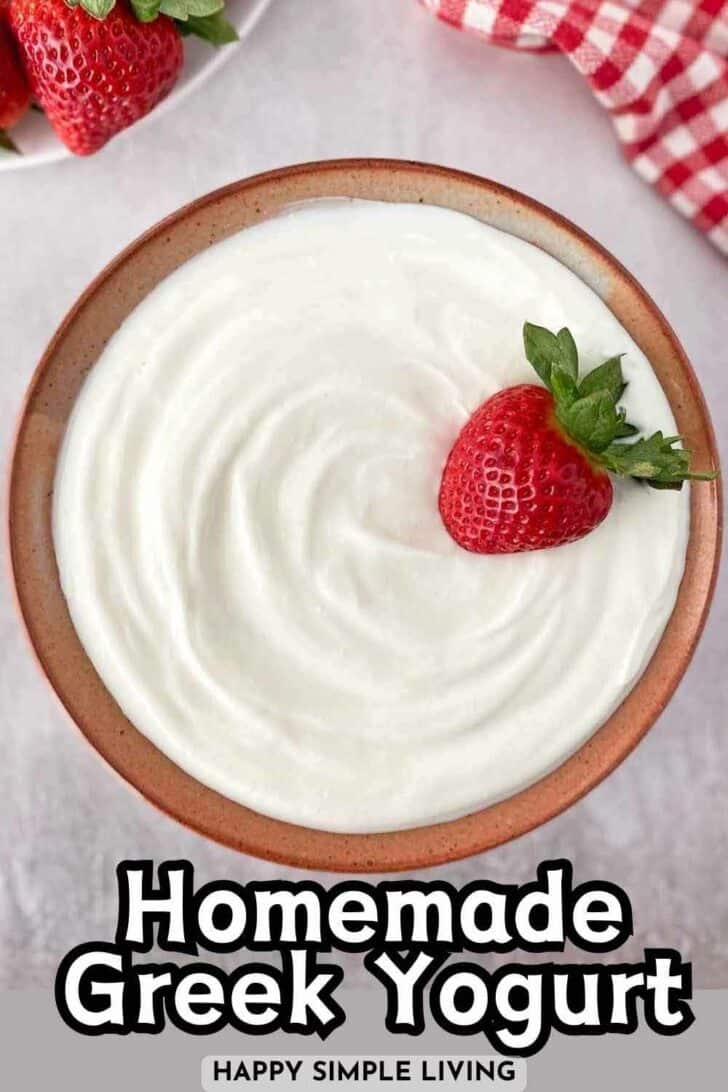

Have you ever wanted to make your own Greek yogurt? I’ve made this recipe countless times, and you can, too. Just follow the easy directions and enjoy thick, creamy homemade Greek yogurt any time you like.
I first published this recipe on March 6, 2011. Hundreds of readers added comments and questions over the years, so now I’ve updated the post with new photos and more information.
Back in 2011 a blog was often like an online diary, but these days most readers want the information presented quickly and concisely. “We don’t want to read your life story!” they say, so I’ve removed my original scintillating intro about tasting FAGE Greek yogurt for the first time at my aunt’s home.
There’s even a “jump to recipe” button at the top of the post now, so you can skip the step by step tutorial if you wish and go straight to the printable recipe card. What a time to be alive!
Shall we make some delicious homemade Greek yogurt?
This post may contain affiliate links. Please read our disclosure policy.
Why You’ll Love This Recipe
Amazing Flavor and Texture: Thick, creamy Greek yogurt compares to regular yogurt like a home-grown tomato compares to a February grocery store tomato; it tastes a kazillion times better!
Economical: If you eat a lot of Greek yogurt like I do (almost every morning), the cost can add up. Making your own yogurt from scratch is easy and saves money!
All Natural: You’ll have total control over the ingredients, so you can avoid the additives in store-bought yogurt and make a very pure product.
Ingredients Notes
You only need two simple ingredients to make 48 ounces of your own fantastic, creamy, thickened yogurt:
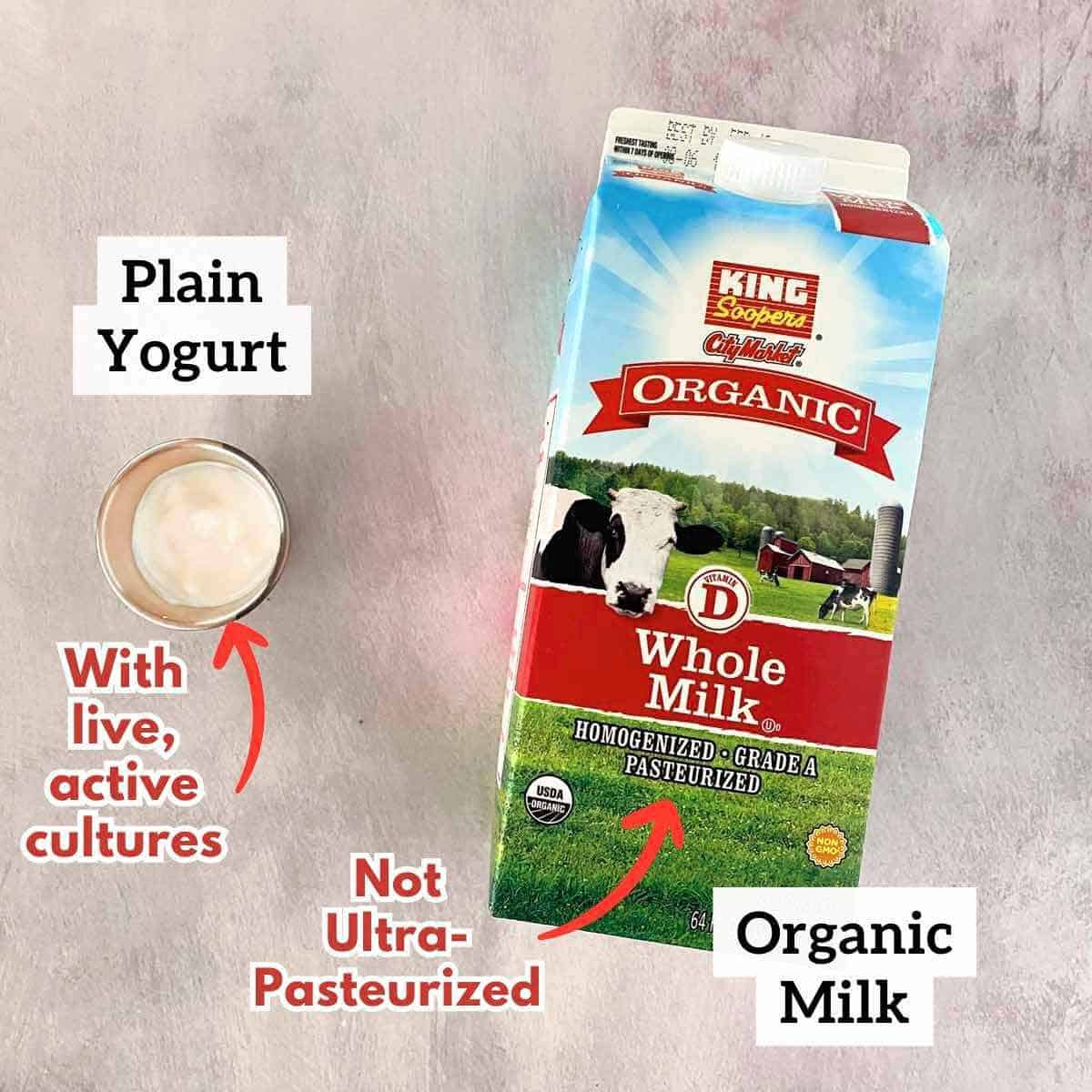
1/2 gallon milk – fat content of your choice. I generally use organic whole milk or 2% milk. The higher the fat content in the milk you use, the creamier your yogurt will be.
Note: I prefer to prepare this recipe with organic milk, which is produced without any synthetic chemicals, hormones or antibiotics. (Antibiotics may interfere with the yogurt-making process.)
Make sure you use regular pasteurized milk instead of ultra-pasteurized. Why? Ultra-pasteurized milk is briefly heated at a high temperature that can kill the live cultures in the milk.
2 to 3 tablespoons plain prepared yogurt (make sure it contains live, active cultures)
Note: After making your first batch, you can simply save a couple tablespoons of your homemade yogurt to start the next batch. I love that this process becomes indefinitely sustainable!
Money Saving Tip
If your grocery story has a bargain section in the dairy case, check for organic milk that is nearing its expiration date.
This milk is perfect for yogurt making, and is often sold at a discount.
Cooking Equipment
Here’s what you’ll need to prepare this homemade Greek yogurt recipe:
- Cooking thermometer – either a candy thermometer or an instant-read thermometer work best
- Large mesh strainer
- Mixing bowl that the strainer fits inside, so the yogurt can drain
- Cheesecloth to fit 4 layers when draped over the strainer
Step by Step Directions
To make regular yogurt without a yogurt maker, I’ve always followed the basic recipe in the Joy of Cooking cookbook.
The finished yogurt is then strained through cheesecloth for a few hours to release extra whey and liquids and transform into creamy Greek yogurt. Here’s the process:
STEP ONE: To begin, pour 2 tablespoons of the milk in a small bowl and reserve.
STEP TWO: Pour the rest of the milk into a double boiler or heavy-bottomed pan and turn the heat to medium. If using a double boiler, cover the milk. If the pot is directly on the burner, stir it and watch it very, very carefully so you don’t burn the bottom.
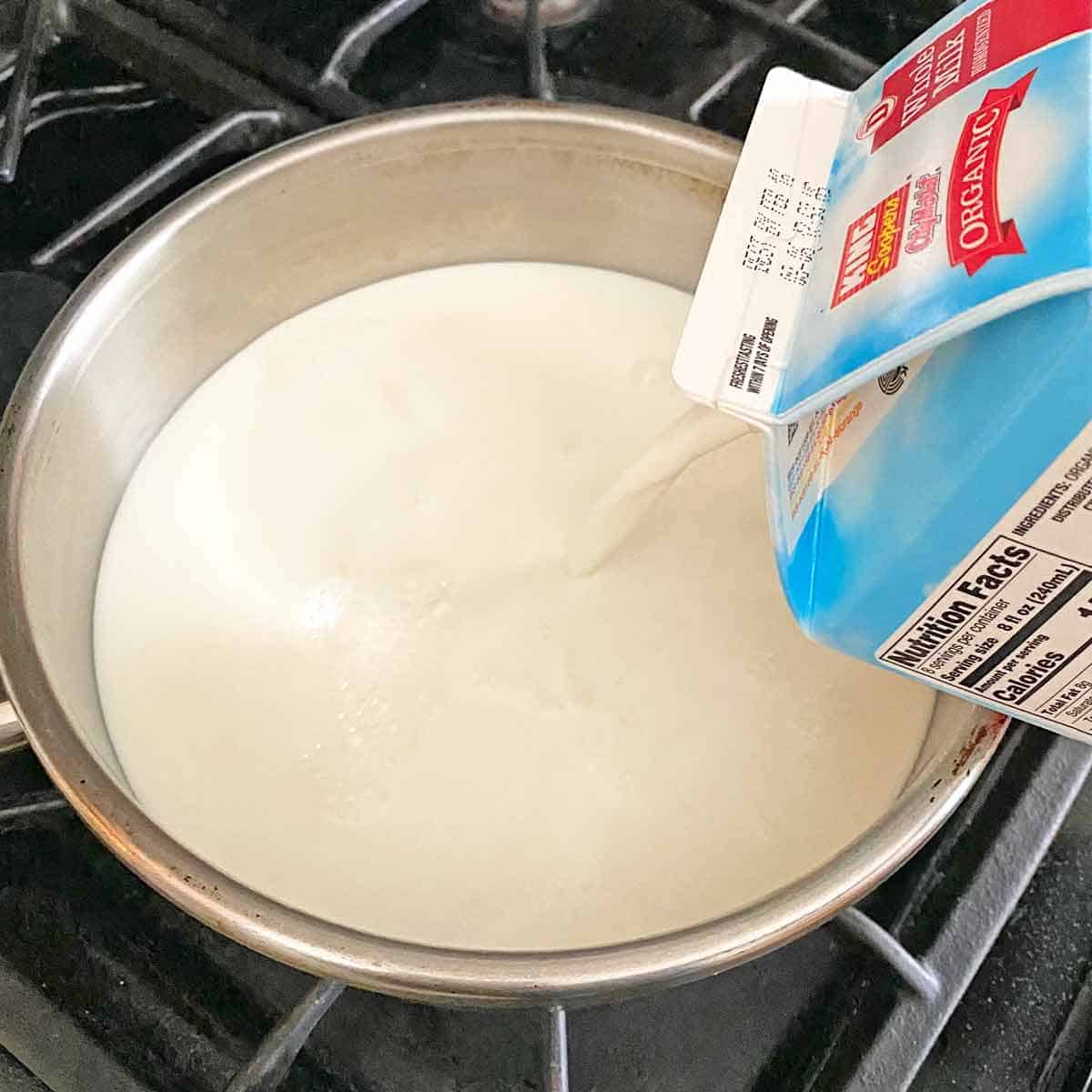
STEP THREE: Heat the milk to 180 degrees F. It helps to clip a candy thermometer to the side of the pan so you can carefully watch the temperature as it rises. Or you can check frequently with an instant read thermometer.
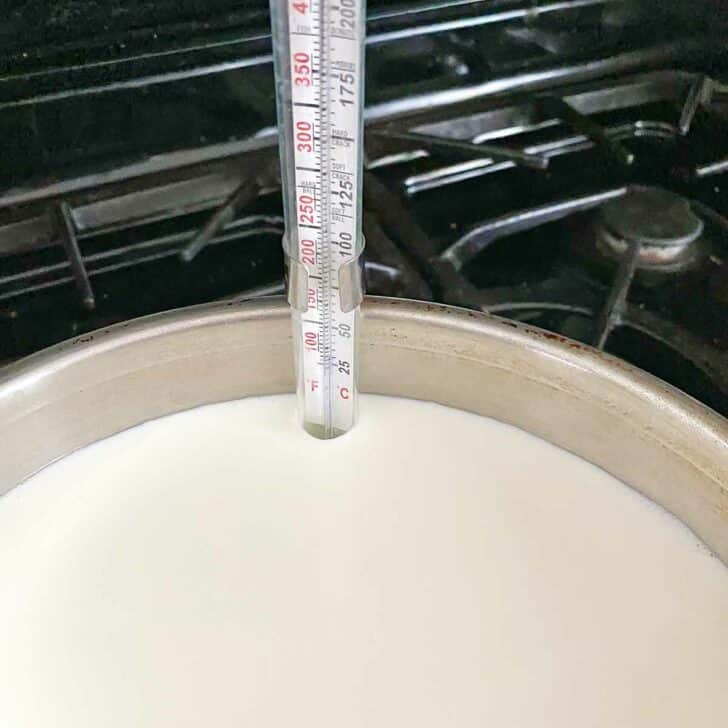
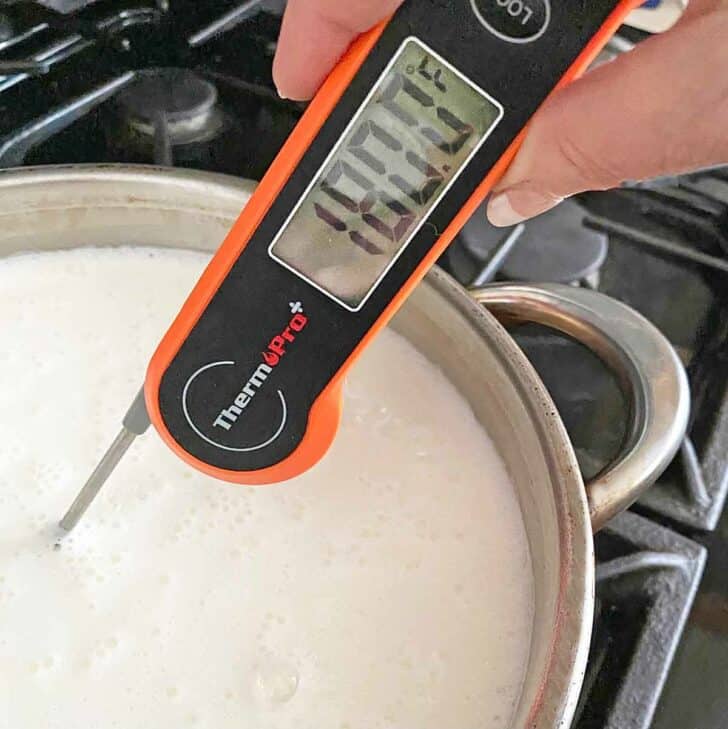
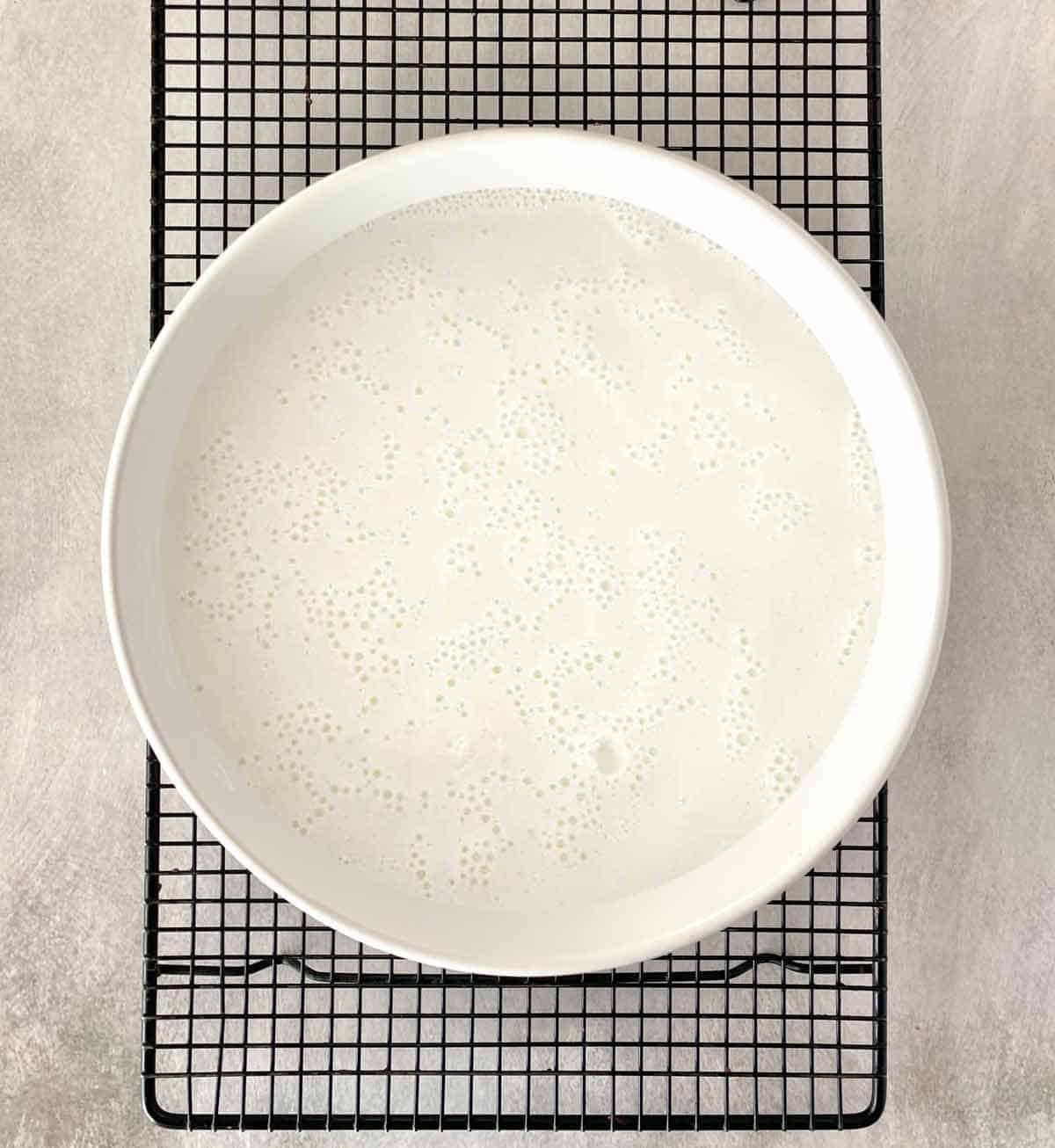
STEP FOUR: As soon as the temperature reaches 180 degrees, F, immediately remove the pot from the stove. Pour the milk through a wire mesh strainer into a 3 quart baking dish and leave it uncovered.
Put the dish on a cooling rack at room temperature, and let the milk cool to between 105 and 110 degrees F. Stir it a few times during the cooling process to prevent a “skin” from forming on top of the milk.
In our kitchen, this took about 50 minutes. (Note: remember to leave the dish completely uncovered at this stage, so the good bacteria from the air can start working their magic!)
STEP FIVE: While you’re waiting for the milk to cool, turn on your oven to the “warm” or “proof” setting. If your oven doesn’t have that setting, turn it to 150 degrees F.
STEP SIX: Combine the 2 tablespoons of milk you saved with 2 1/2 tablespoons prepared yogurt in a small bowl and reserve.
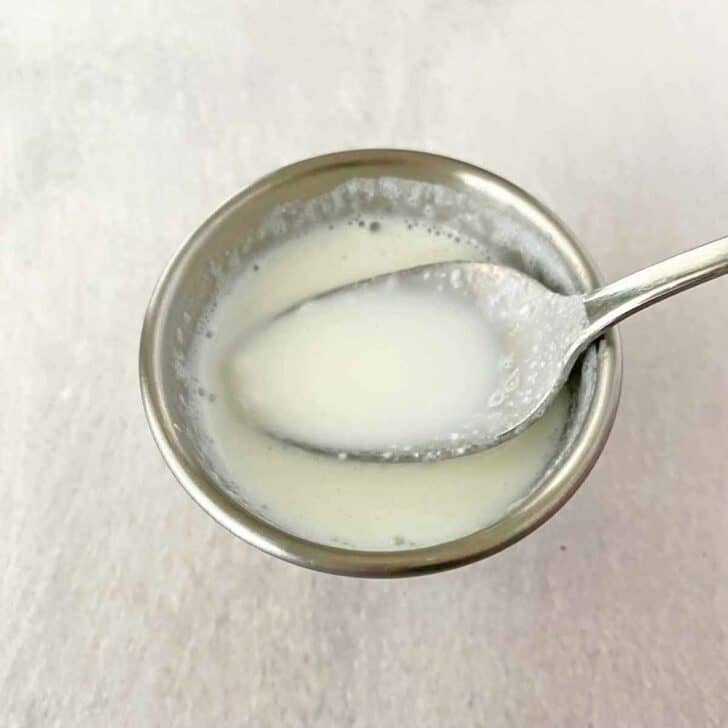
PRO TIP: Resist the temptation to add more than 3 tablespoons yogurt. According to the Joy of Cooking, “you may wonder why so little starter is used and think that a little more will give a better result. It won’t. The bacillus, if crowded, gives a sour, watery product.”
STEP SEVEN: Once the milk has cooled to between 105 and 110 degrees, add the yogurt-milk mixture and stir well to combine. (Don’t forget this important step.) Put the lid on the casserole dish and cover it with a dishtowel to help insulate it from temperature fluctuations.
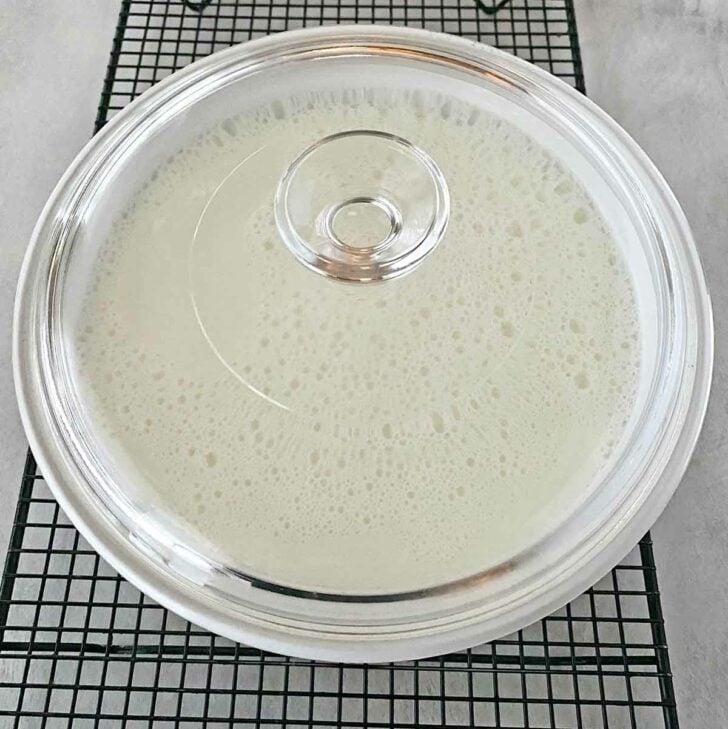
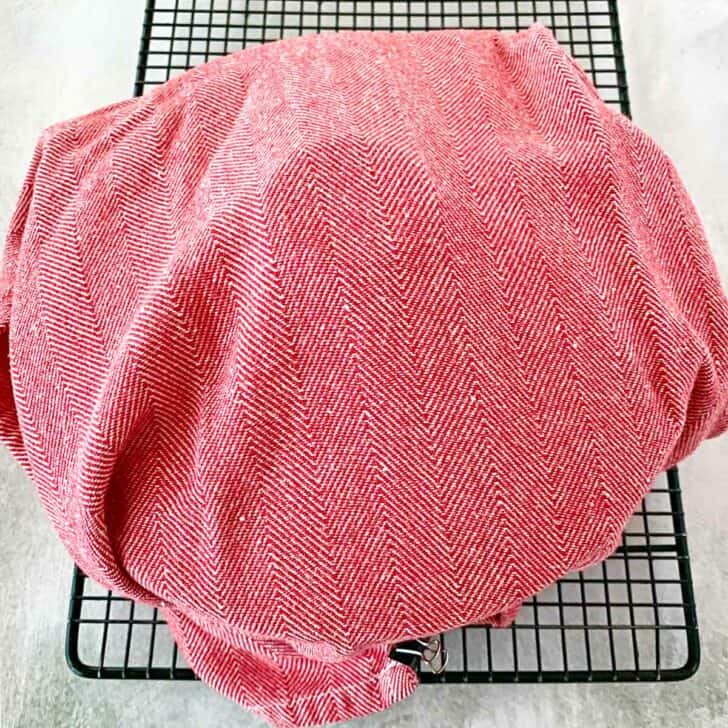
STEP EIGHT: Turn your oven off, but now turn the oven light on. Just the light from the oven should keep the dish warm enough to enable the yogurt-making process.
Put the towel-covered dish in the oven, making sure that the towel isn’t touching the oven lightbulb, and leave the oven light on.
Note: If your oven light doesn’t emit any heat, you can alternately put the towel-covered dish on a heating pad set on “low,” or put it in a cooler with a snug-fitting lid and several sealed jars of hot water to maintain the heat.
Leave the yogurt undisturbed for 7 or 8 hours, or overnight.
STEP NINE: In the morning, carefully take the dish out, unwrap it and remove the lid, and check to see whether the milk has turned to yogurt. After ten hours, this is how our yogurt looked:
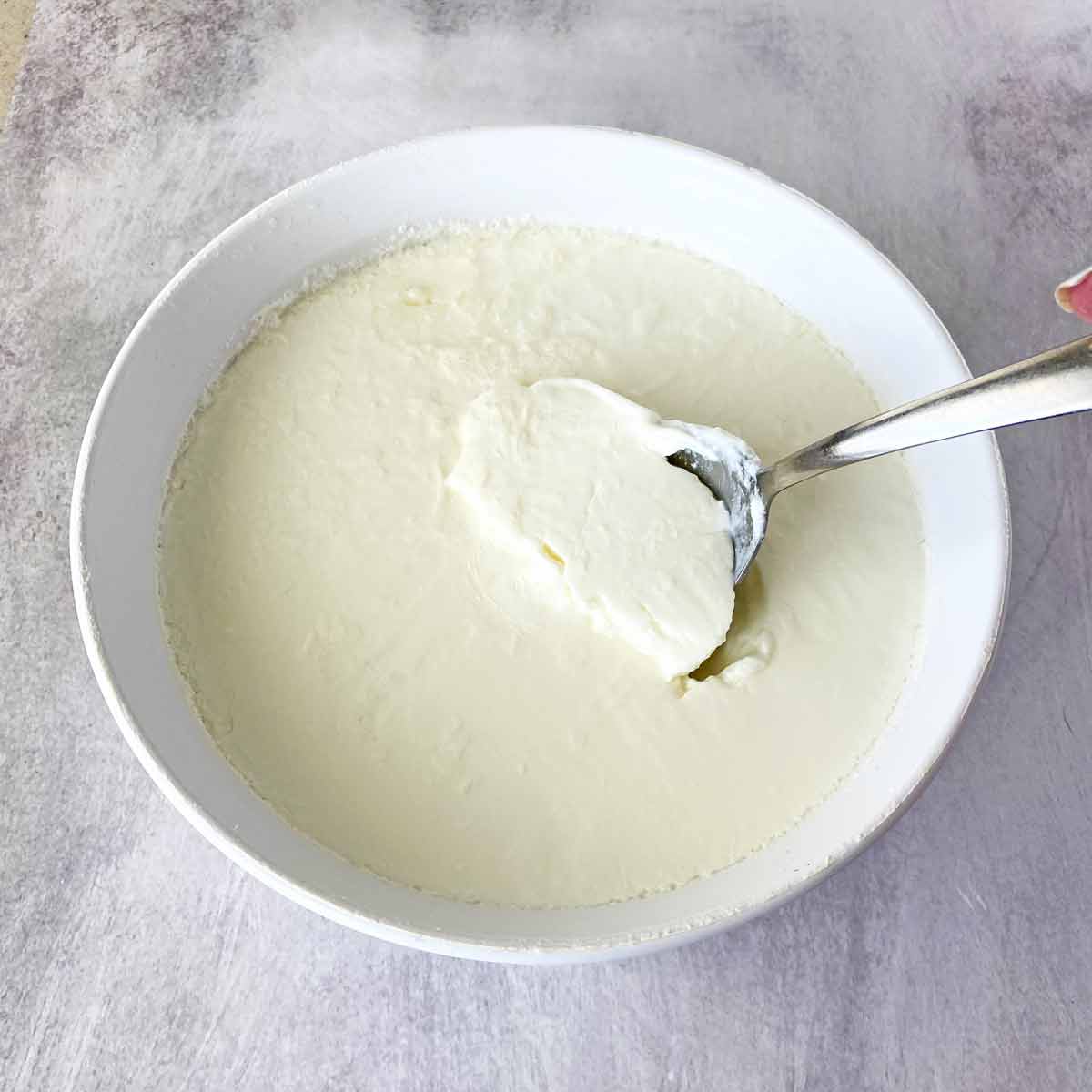
If your batch isn’t quite thickened, return it to the oven and check on it again in an hour. Once the yogurt is sufficiently thickened, you can stop at this stage if you want regular yogurt. Just stir the mixture and refrigerate it; you may need to pour off a little of the watery liquid. Don’t forget to turn off the light in your oven!
STEP TEN: For creamy Greek yogurt, refrigerate the yogurt in the covered dish for at least three hours to allow it to completely cool and thicken.
Meanwhile, line a large strainer with four layers of damp cheesecloth and find a bowl that the strainer will fit inside:
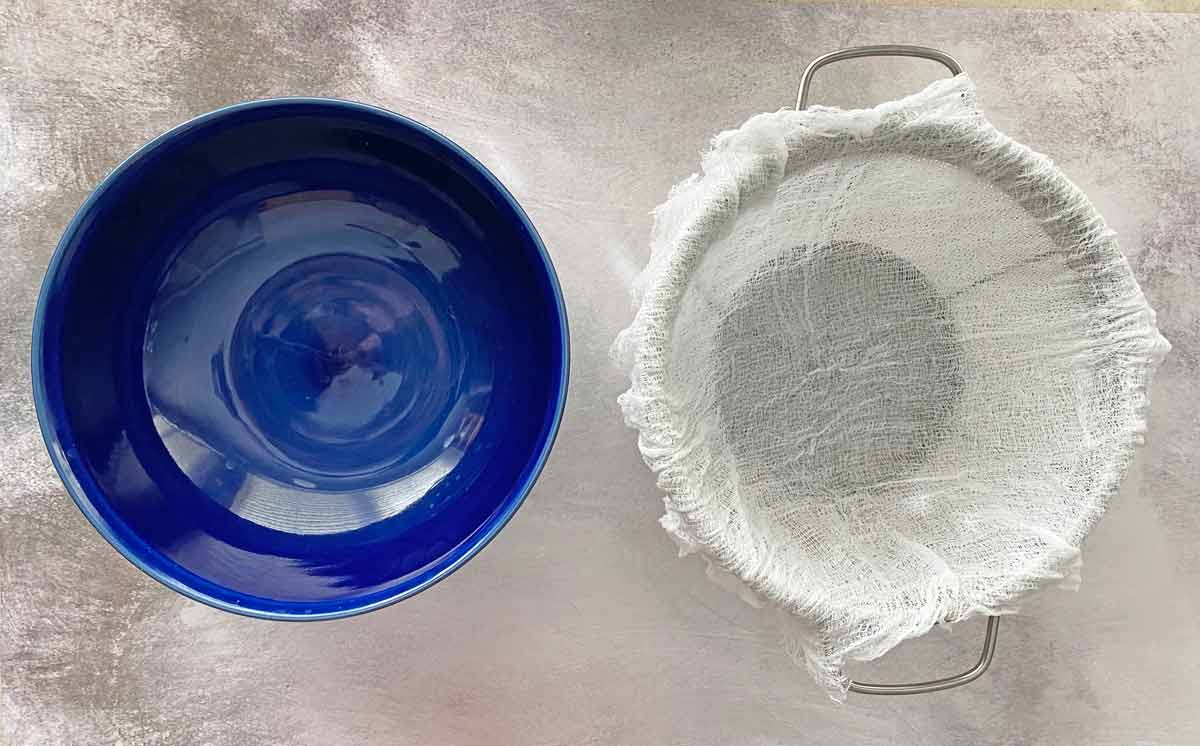
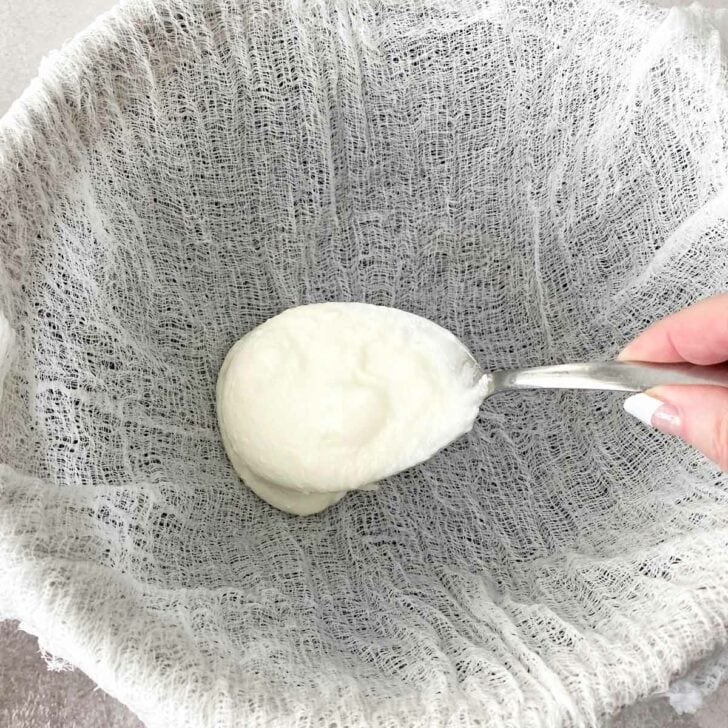
STEP ELEVEN: Put the strainer inside the large bowl, and spoon in all the yogurt to start the straining process.
Refrigerate for one hour. Pour out the liquid that has accumulated in the bottom of the bowl. This is the whey—that’s right, the very same delicacy Little Miss Muffet ate while she was sitting on her tuffet.
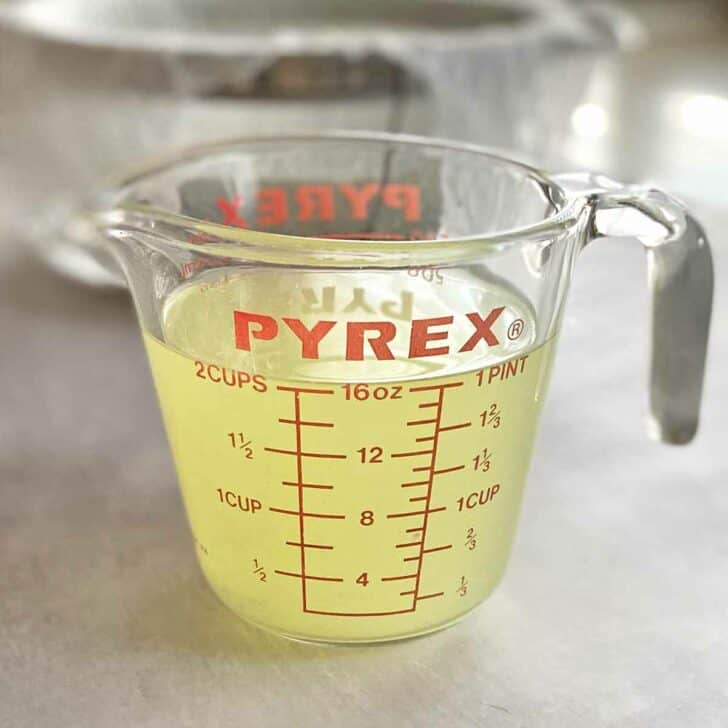
You can save the whey and use it for cooking or baking (like this yummy Whey Sourdough Bread).
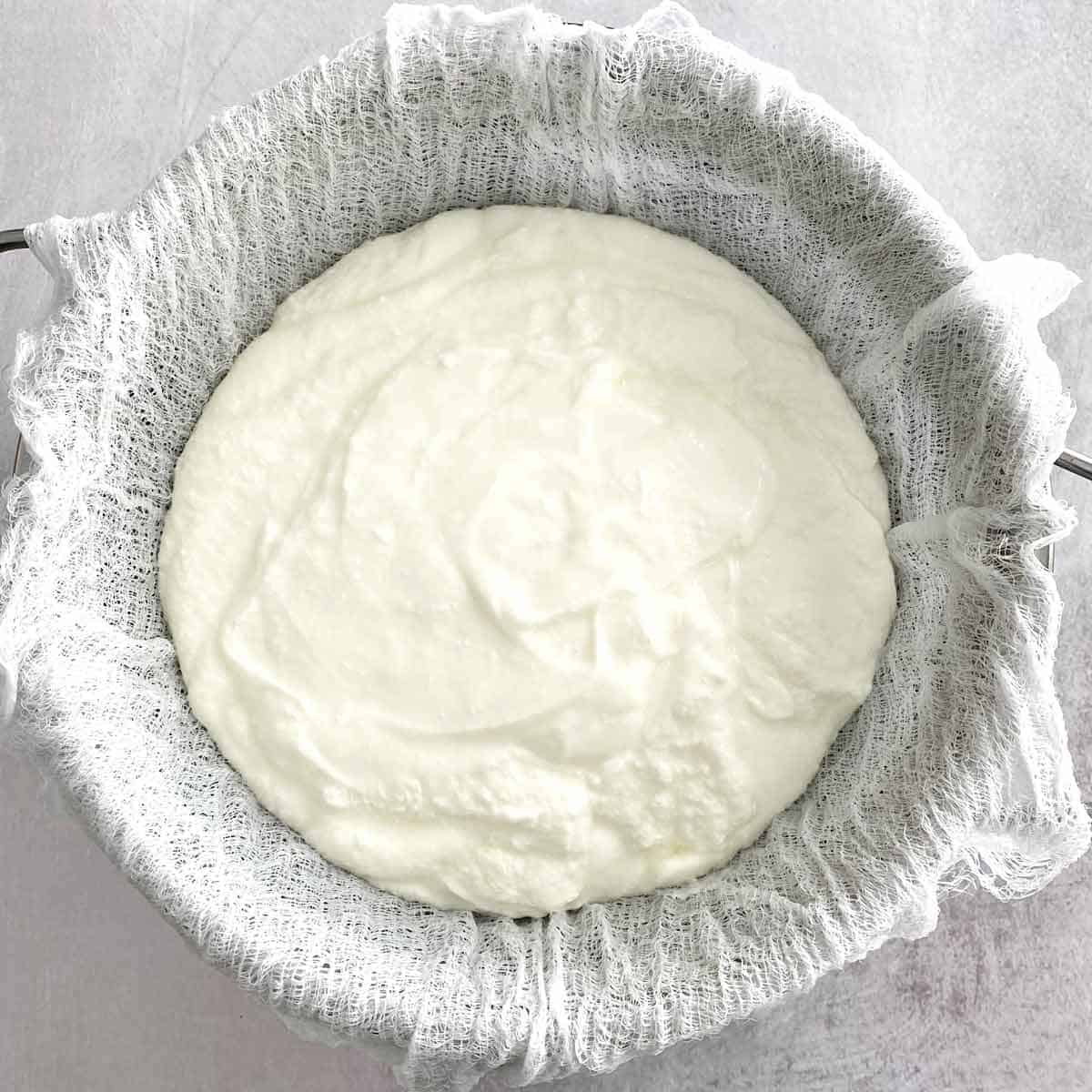
Return the bowl to the refrigerator for one more hour, and strain the liquid again. Our batch drained off about two cups of whey, but you may have more or less and that’s fine.
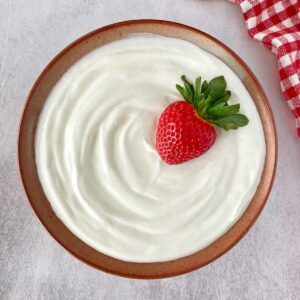
The yogurt should now look thick and creamy:
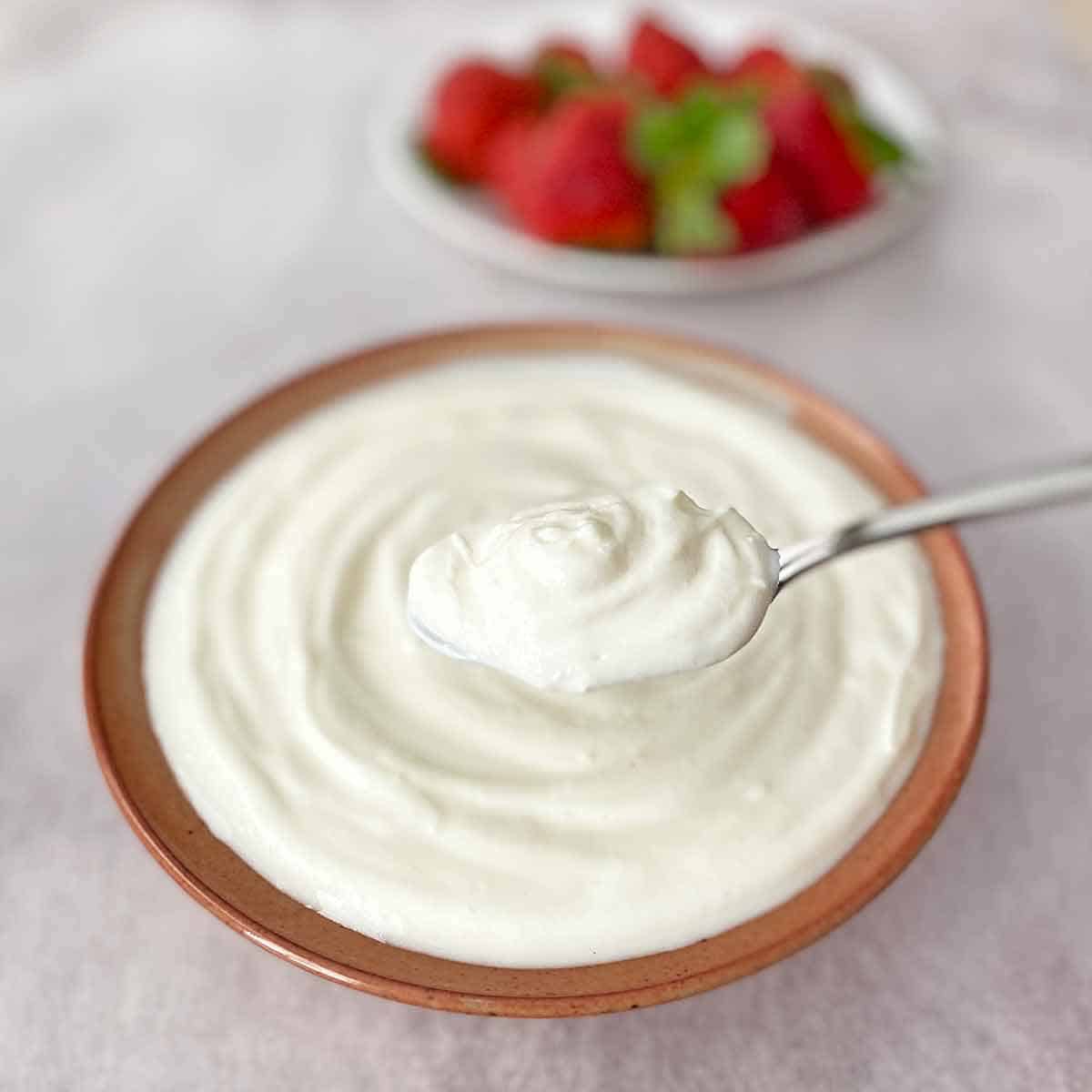
STEP TWELVE: It’s ready to serve! Transfer it to a bowl and stir it for a minute or two to smooth the thick yogurt before serving. Or spoon it into a container and refrigerate it, tightly covered, for up to a week. Makes about 6 cups, or 8 6-ounce servings.
Serving Suggestions
You can enjoy the Greek yoghurt as is, or top it with:
Remember to save a couple of tablespoons of your homemade yogurt so you can use it as starter for the next batch!
Other Ways to Use Greek Yogurt
- Use it in place of sour cream in your favorite dip recipe.
- Make Tzatziki Sauce, the sauce/dip that’s popular with gyros and in Mediterranean cuisine.
- Spoon it over a baked potato.
- Blend it into a breakfast smoothie.
- Make yogurt popsicles!
Troubleshooting: If Your Homemade Greek Yogurt Doesn’t Thicken
After many successful batches of homemade yogurt, I recently had a big FAIL. The only thing I’d done differently was to use our smaller, upper oven to incubate the yogurt instead of the lower oven I usually use.
When I pulled the yogurt out the next morning it hadn’t thickened at all; it was simply a big bowl of warm milk. I was so disappointed! At first I suspected the milk, because I’d used the big-name brand of organic milk that is known to be ultra-pasteurized. But when I measured the temperature of the milk, it was 130 degrees – too hot.
I decided to experiment with the failed batch, and let the milk cool back to 110 degrees. Then I added 2 more tablespoons of yogurt mixed with 1 tablespoon of milk. (My thinking was that the too-high temperature had killed the live cultures from the previously-added yogurt.)
I wrapped the bowl in a towel, put it in the lower oven with the oven light on, and let it rest for 8 hours.
When I opened the lid, I was amazed to see that the batch was thick and creamy. In fact, it was one of the thickest batches I’ve ever made. The consistency was slightly sticky, but after I strained the yogurt it was fine.
So if you ever have a batch that fails, you may want to try again and try to find the right spot where you can keep the yogurt at that ideal temperature of about 110 degrees F.
Printable Recipe Card
If you enjoy this recipe, click on the stars ⭐️⭐️⭐️⭐️⭐️ below to leave a rating! It helps us so much, and we love reading your comments, too!
Homemade Greek Yogurt
Equipment
- Candy thermometer
- Large mesh strainer
- Large mixing bowl
- Cheesecloth
- 3-quart casserole dish
- cooling rack
- Large dishtowel
Ingredients
- 1/2 gallon whole organic milk
- 2 1/2 tablespoons plain yogurt with active cultures
Instructions
- Pour 2 tablespoons of the milk in a small bowl and reserve.
- Pour the rest of the milk into a double boiler or heavy-bottomed pan and turn the heat to medium. If using a double boiler, cover the milk. If the pot is directly on the burner, stir it and watch it very, very carefully so you don’t burn the bottom.
- Heat the milk to 180 degrees F. It helps to clip a candy thermometer to the side of the pan so you can carefully watch the temperature as it rises. Or you can check frequently with an instant read thermometer.
- As soon as the temperature reaches 180 degrees, F, immediately remove the pot from the stove. Pour the milk through a wire mesh strainer into a 3 quart baking dish and leave it uncovered. Let the milk cool to between 105 and 110 degrees F, stirring a few times during the cooling process to prevent a “skin” from forming on top of the milk.
- Turn on your oven to the “warm” or “proof” setting. If your oven doesn’t have that setting, turn it to 150 degrees F.
- Combine the 2 tablespoons of milk you saved with 2 1/2 tablespoons prepared yogurt in a small bowl and reserve.
- Once the milk has cooled to between 105 and 110 degrees, add the yogurt-milk mixture and stir well to combine. Put the lid on the casserole dish and cover it with a dishtowel to help insulate it from temperature fluctuations.
- Turn your oven off, but now turn the oven light on. Just the light from the oven should keep the dish warm enough to enable the yogurt-making process. Put the towel-covered dish in the oven, making sure that the towel isn’t near the oven lightbulb, and leave the oven light on. Leave the yogurt undisturbed for 7 or 8 hours, or overnight.
- After 8 hours or the next morning, carefully take the dish out, unwrap it and remove the lid, and check to see whether the milk has turned to yogurt. If your batch isn’t quite thickened, return it to the oven and check on it again in an hour.
- Once the yogurt is sufficiently thickened, place the dish in the refrigerator for 3 hours. Cut 4 pieces of cheesecloth to fit inside a large wire mesh strainer. Run the cheesecloth under water and squeeze out as much water as you can.
- Line the strainer with the cheesecloth and place it inside a large mixing bowl. Spoon all of the yogurt into the strainer. Refrigerate for 1 hour and pour the liquid that has accumulated into a large measuring cup. Return the bowl to the refrigerator for one more hour, and strain the liquid again.
- Your delicious Greek yogurt is ready to enjoy! Stir it for a minute or two to smooth the mixture before serving. Or spoon it into a container and refrigerate it, tightly covered, for up to a week. Makes about 6 cups, or 8 6-ounce servings.
Notes
Nutrition
Save for Later
If you use Pinterest to save and share ideas, here’s a handy pin:


Eliza Cross is the creator of Happy Simple Living, where she shares ideas to help busy people simplify cooking, gardening, holidays, home, and money. She is also the award-winning author of 17 cookbooks, including Small Bites and 101 Things To Do With Bacon.




Can the recipe be doubled?
Yes, I know the recipe can be doubled because I halved the original recipe. xo
For Magnoliasouth – About your comment on your oven temp. –
If I read the directions corretly, you just have to heat the oven to about 170. After your oven has reached 170, turn off the oven, & open it for a bit to cool down to 150. Then turn on the oven light ( if your oven is new, it should have a workable oven light ), and put your towel wrapped ,covered bowl of milk-yogurt mixture & let it “bake” overnight or for 8 hours. It’s worked for me this way. Hope this helps with your circumstances!!
I was wondering about using whole raw organic cows’ milk. Any thoughts on that?
I haven’t had the pleasure of trying it, but my hunch is that yogurt made from whole raw organic milk would be DELISH. :-) If you try it, will you let us know how it turns out?
xo
I had one unsuccessful try with another recipe. Now tried yours and it looks way better. I will be having it for breakfast tomorrow morning. I wanted it to be really thick and it seems I achieved this. It is still dropping whey (1 Liter already from a batch made with 2 liters of milk). The organic milk and the “bioghurt” I used seem to be the difference from my first try. Also the towel covering it to keep it warm. :)
Vane, I’m so glad the recipe worked for you! :-)
Did you know that if you leave the yogurt on your kitchen counter for 3 or 4 hours you get homemade cream cheese? Its an excellent source of probiotic cultures and has a nice tangy taste. Just let your Greek yogurt sit longer! Great recipe! Thanks. :)
This is a great recipe, Eliza! I followed your instructions and it came out great. It tastes and looks like whip cream and needs no sugar it is so creamy and rich! Thanks for the fantastic, detailed instructions!
Thanks so much for letting me know that you had success with the recipe, Denise. Hurray! xo
Just a question… can you use lactaid milk?
Thanks in Advance
Thanks for the recipe, I tried it yesterday and I’ve just enjoyed my first batch. I used to make yogurt years ago with a salton yogurt maker. This was so easy. I also didn’t want bother with cheesecloth, so I used sheer curtains. Worked great. I boiled them first in some water with baking soda and dried them overnight. I even shared some whey with my dog Hoover and she loved it!
The whey is a pricless “leftover”..I have made yogurt just to get the whey off of it to use in making homemade kimchi & sauerkraut. It is even more nutritious than the yogurt. NEVER discard it!
I make my own yogurt and use my food dehydrator. It has a special adapter ring to accommodate taller containers. I set my dehydrator to 135f. When I awake 7 hours later its thick and creamy. I have attempted setting the yogurt for only 4 hours and this has worked too. With refrigeration, it thickens further. Cheesecloth is meant to be doubled or tripled for culinary usage. Don’t forget to wet prior to using. And rinse with baking soda and hot water. Thanks for clarifying Greek yogurt is not a particular milk. It’s truly a style.
I didn’t read the long list of comments. It just seems you’re working too hard. Put quart jars in your sink when you begin making the yogurt. Fill with hot water. When you have added the culture to the cooled milk, empty the jars of the water and pour the milk mixture into them and cover with lids. Take a cooler, add very warm water to about half the height of the jars and place jars in water. Close cooler and walk away. Now, while your yogurt sets, you can bake!!!
Thanks for the great recipe – we eat quarts of Greek Yogurt every week. Can I use powdered notfat milk in this recipe? With the anticipated rise in diry prices I was consideeing laying in a store of nonfat milk prior to the looming increase.
Hi, Christiane,
I haven’t tried making yogurt with dried milk, but here’s what our fellow blogger Hillbilly Housewife recommends:
“When making yogurt with powdered milk, it is good to use more dry milk powder than you would to just make fluid milk. For instance, normally I would use 1 1/3 cups of dry milk powder to make a quart of milk. When I reconstitute milk for yogurt, I add an extra 1/3 cup of dry milk powder, using 1-2/3 cups of dry milk powder for a quart of yogurt.”
Good luck!
I was beginning to wonder if anyone else used powdered milk. Actually, that’s all I’ve ever used. And I too, add extra powder milk. Years ago when my 4 children were young and loved yogurt and GrapeNuts ( waaay before it was popular) I use to make yogurt by the quarts. I used a food dehydrator, which held 5 qt, jars. I heated water in the microwave to desired temp then mixed in the milk powder and then starter. I would use 2 to 3 tbls. Fill the jars to within an inch of top. Place one tray on dehydrator on which to place the jars. Then invert tray over the top of the jars. Plug in and then check when you get up in the morning. Now, that I live by myself I use a small 7 jar yogurt maker. I am now eager to try the Greek-style yogurt.
After my milk has cooled to 40-49C and I’ve mixed in my starter,I just leave the milk in my stainless steel pot, set the pot on one of those bags you heat in the microwave for 2 minutes (for sore muscles, etc), wrap the entire schmoz in a space blanket and let it sit undisturbed overnight. In the morning it is done. Remember to heat your Magic Bag for 2 minutes. A space blanket is one of those very thin, shiny foil things you can find in a first aid kit to wrap shock victims in or you can use it camping or to put on windows to block the sun on a hot day. You can buy them very cheaply at a dollar store. I strain my yogurt all the next day in the fridge because I like it thicker. I also sweeten with honey and flavor with some pure vanilla.
In lieu of cheesecloth try paint strainers from local home supply store,(Home Depot) a synthetic mesh material with elastic top, easily washed and work better than cheesecloth.
I’ll have to check out the mesh strainers the next time I’m at the hardware store. Thanks!
I have been making my own yogurt (and greek yogurt) for a while now, and there are multiple ways to incubate your yogurt. The most important thing is keeping the yogurt at the proper temperature (105 – 115 F) for the 8 hours. I use a cooler with my yogurt divided up in ball jars, and I fill it with water at 120F, which is still above 110F after 8 hours.
Also for straining to greek yogurt, you can use any strainer you have, and line it with coffee filters. You just dampen the filters with water and overlap them in the strainer so that all of the holes are covered.
The next step after making your own greek yogurt is finding a use for the whey (greenish liquid) that comes off of the yogurt when you strain it into greek yogurt. There are many uses for it!
As for how long it will last, I sterilize the ball jars that the yogurt goes into, and the jars are not opened until the yogurt is used, so it has lasted me more than two weeks.
These are all great tips, Philip – thank you!
P.S. I like to use the whey in homemade pizza dough.
Thank you SO MUCH for this amazing recipe. I’ve spent a small fortune on store-bought Greek yogurt over the years and when I saw your post about making your own, I knew I just had to try it. I started my first batch last night and woke up to PERFECT yogurt this morning. Strained it and it is thick, creamy and absolutely delicious. You’ve changed my life! :) Thank you!
Your comment made my day – so glad you’re happy with the recipe.
I really like your blog, I’m bookmarking it so I can easily visit it often. Thanks for the good instructions on the Greek style yogurt.
I make artisan cheese from my goat’s milk and cow’s milk from a dairy near me. I just wanted to let you and your readers know about a nifty way to strain the yogurt not using the very loosely woven type cheese cloth in the picture on your blog. I buy 100% cotton “flour sack” towels, or muslin from a fabric store. I use it for my cheese making and for yogurt. It’s less expensive than the cheese cloth in the grocery stores and works much better in my opinion.
Thanks for sharing that tip. I’m going to try muslin the next time I make yogurt.
I am going to try this recipe today IF I can source some cheesecloth here in Holland. I’m off to the shops on my trusty bike. Cross your fingers for me!
Cheers,
jb warren
PS. Thanks for the recipe. :-D
Fingers tightly crossed! :-)
Hi, i tried your yogurt the last time and it was ok but more soupy than yogurty, it just wasn’t firm enough. This time i used Activia as a starter and heated the milk for 185 to 190 for 30 minutes. Between the two, longer heating time to “This denatures and unravels the whey protein, resulting in a thicker and less whey-y yogurt” and a yogurt with different cultures, it made a big difference. Mine came out about as thick as any commercial brand before refrigerating. I incubated the stove method. I combined your website and this website. Thanks so much.
http://concasse.blogspot.com/2011/01/homemade-yogurt-two-methods.html
I want to also add that i used 2% milk this time and last. Last time i used our local Wegmans store brand as a starter, which didn’t work so good, Activia this time made a difference in firmness. Who new? I figured a bacteria starter is the same as any other, wrong!
Thanks for sharing your helpful tips and experiences, John!
I haven’t tried the Greek version yet for homemade. We have been making yogurt for the past year with a yogurt maker. It is easy and efficient. We haven’t had any fail. You can even use powdered milk or freeze dried milk and it still turns out great. We are going to try straining it next time as I had Greek yogurt for the first time and love it. You can also use the whey in casseroles and cooking, not just in bread. It is supposed to be healthy too. I like to use homemade jam in mine for the sweet, and apple butter is an amazing flavor too!
Thanks for your tips about how to use whey, Pattyann. Apple butter with yogurt sounds yummy, too! :-)
I tried this recipe step by step and I love it. I don’t use a thermometer because I don’t have one so I remove the pot from the stove once I see some bubbles. I set my oven to 170F (can’t go lower than that) and it still works. That’s it. No more buying yogurt. I’m making my own ( Tastes much better and I save money big time ) Many thanks for sharing, Eliza
I’m so glad the recipe worked for you, Max. Thanks for sharing your method, too.
Hi!
I made your yogurt and it turned out great! One concern I have is that I forgot and left it out for 19 hrs ( overnight)! Is it still okay? It looks and smells fine.
I also doubled the recipe and made a whole gallon.
Dear Lanie,
Since yogurt has been made for thousands of years in less-than-ideal conditions, my guess would be that your yogurt is fine. Here’s hoping it’s just wonderful, especially since you made a gallon! :-)
xo,
Eliza
I try to make as much homemade food items that I can for my family, this is just one item that has never worked for me in the past as the consistency of the yogurt is ‘slimy’, not a good texture for me. I will give it another shot with your recipe. I hope it turns out well.
Good luck, Christa! Let us know how it turns out.
I am a mom trying to use less processed food for my boys, I also am slowly cutting all of the refined sugar out of our diets. Love that this is organic, and just wanted to let other mommies out there know if your kiddos like “go-gurt” you can make the long tubes with a simple vacuum sealer and the bags that come with it. I blend my yogurt with fresh local berries, package it in the tubes and freeze. Perfect for lunches.
I also use the vacuum sealed tubes to make “ice-pops” with organic fruit juice.
Lisa, thanks for these kid-friendly tips. I don’t have a vacuum sealer, but I’m sure our readers who do will love this idea.