
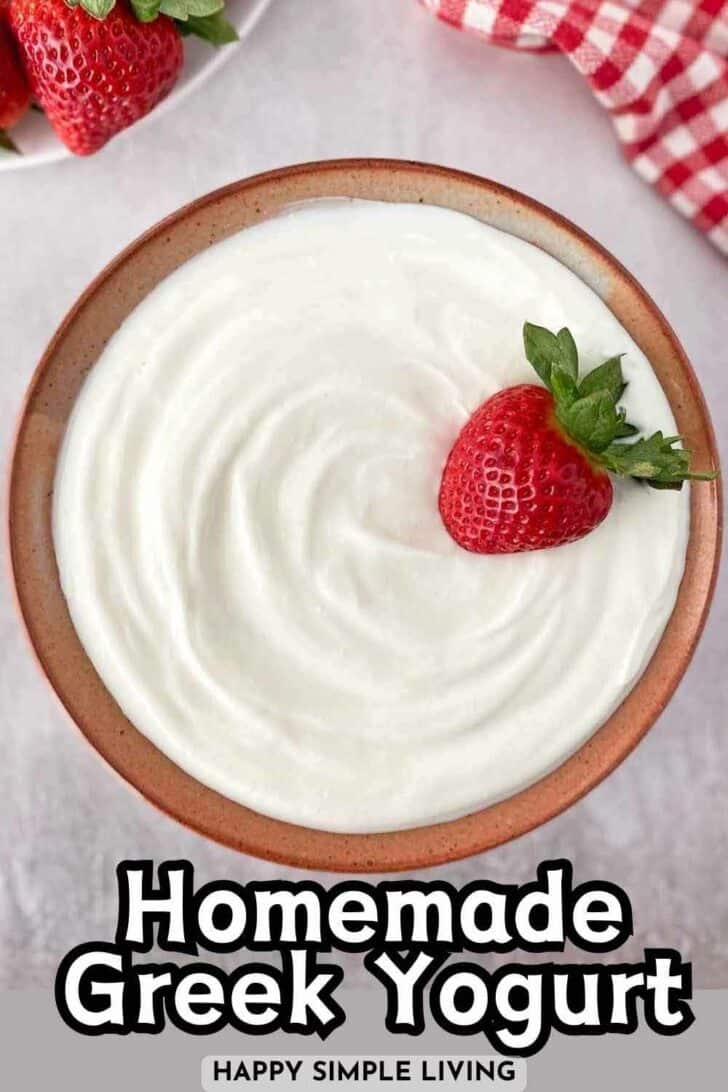

Have you ever wanted to make your own Greek yogurt? I’ve made this recipe countless times, and you can, too. Just follow the easy directions and enjoy thick, creamy homemade Greek yogurt any time you like.
I first published this recipe on March 6, 2011. Hundreds of readers added comments and questions over the years, so now I’ve updated the post with new photos and more information.
Back in 2011 a blog was often like an online diary, but these days most readers want the information presented quickly and concisely. “We don’t want to read your life story!” they say, so I’ve removed my original scintillating intro about tasting FAGE Greek yogurt for the first time at my aunt’s home.
There’s even a “jump to recipe” button at the top of the post now, so you can skip the step by step tutorial if you wish and go straight to the printable recipe card. What a time to be alive!
Shall we make some delicious homemade Greek yogurt?
This post may contain affiliate links. Please read our disclosure policy.
Why You’ll Love This Recipe
Amazing Flavor and Texture: Thick, creamy Greek yogurt compares to regular yogurt like a home-grown tomato compares to a February grocery store tomato; it tastes a kazillion times better!
Economical: If you eat a lot of Greek yogurt like I do (almost every morning), the cost can add up. Making your own yogurt from scratch is easy and saves money!
All Natural: You’ll have total control over the ingredients, so you can avoid the additives in store-bought yogurt and make a very pure product.
Ingredients Notes
You only need two simple ingredients to make 48 ounces of your own fantastic, creamy, thickened yogurt:
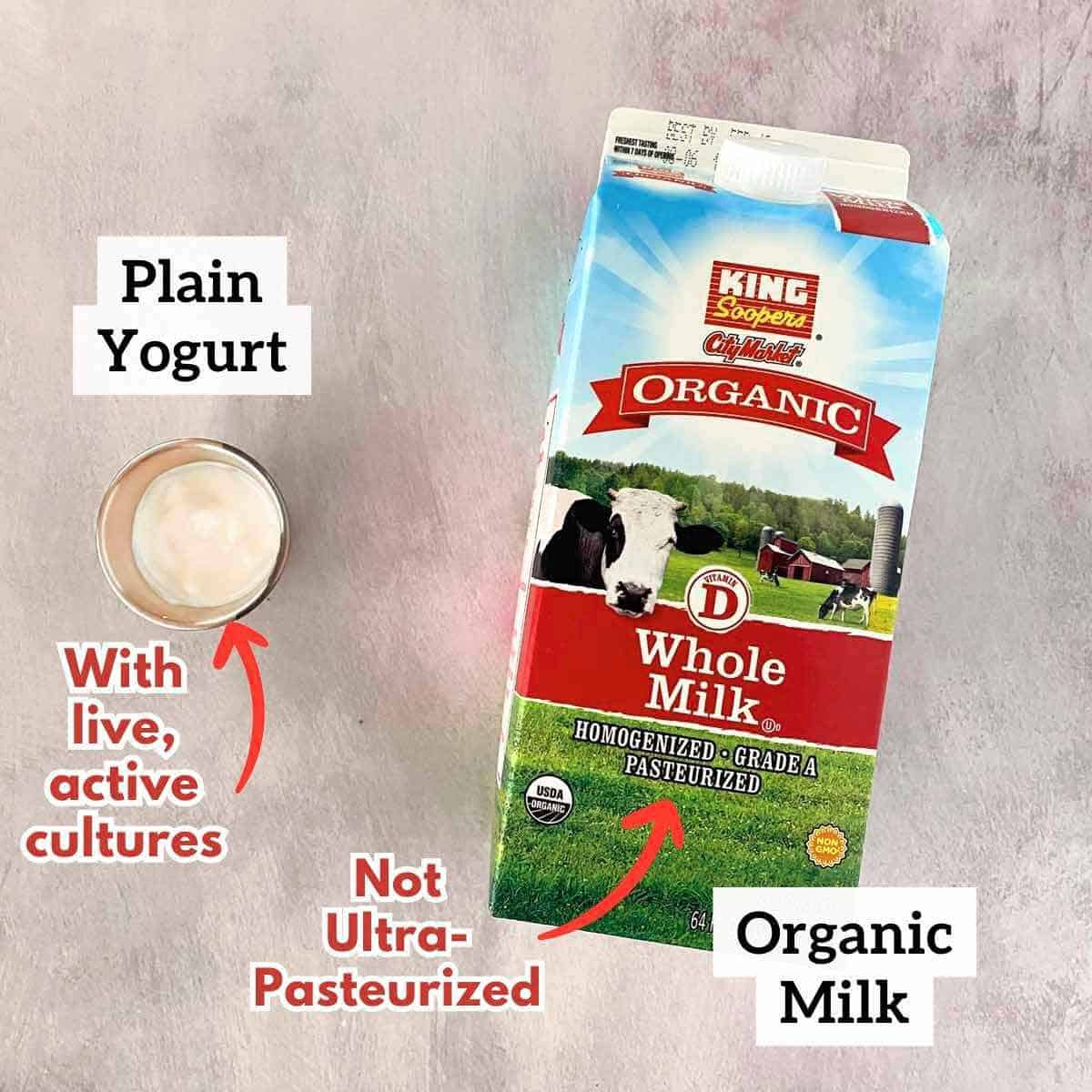
1/2 gallon milk – fat content of your choice. I generally use organic whole milk or 2% milk. The higher the fat content in the milk you use, the creamier your yogurt will be.
Note: I prefer to prepare this recipe with organic milk, which is produced without any synthetic chemicals, hormones or antibiotics. (Antibiotics may interfere with the yogurt-making process.)
Make sure you use regular pasteurized milk instead of ultra-pasteurized. Why? Ultra-pasteurized milk is briefly heated at a high temperature that can kill the live cultures in the milk.
2 to 3 tablespoons plain prepared yogurt (make sure it contains live, active cultures)
Note: After making your first batch, you can simply save a couple tablespoons of your homemade yogurt to start the next batch. I love that this process becomes indefinitely sustainable!
Money Saving Tip
If your grocery story has a bargain section in the dairy case, check for organic milk that is nearing its expiration date.
This milk is perfect for yogurt making, and is often sold at a discount.
Cooking Equipment
Here’s what you’ll need to prepare this homemade Greek yogurt recipe:
- Cooking thermometer – either a candy thermometer or an instant-read thermometer work best
- Large mesh strainer
- Mixing bowl that the strainer fits inside, so the yogurt can drain
- Cheesecloth to fit 4 layers when draped over the strainer
Step by Step Directions
To make regular yogurt without a yogurt maker, I’ve always followed the basic recipe in the Joy of Cooking cookbook.
The finished yogurt is then strained through cheesecloth for a few hours to release extra whey and liquids and transform into creamy Greek yogurt. Here’s the process:
STEP ONE: To begin, pour 2 tablespoons of the milk in a small bowl and reserve.
STEP TWO: Pour the rest of the milk into a double boiler or heavy-bottomed pan and turn the heat to medium. If using a double boiler, cover the milk. If the pot is directly on the burner, stir it and watch it very, very carefully so you don’t burn the bottom.
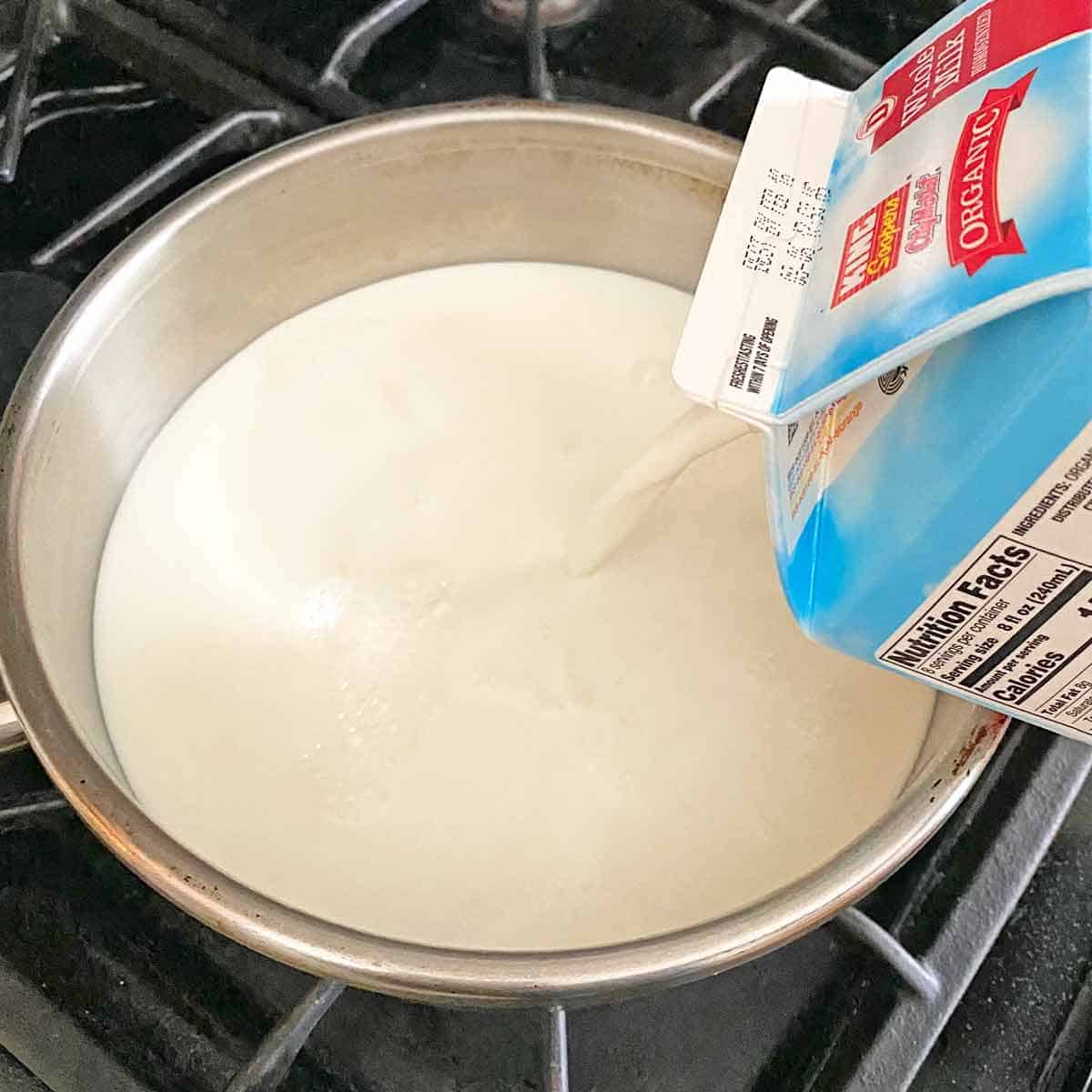
STEP THREE: Heat the milk to 180 degrees F. It helps to clip a candy thermometer to the side of the pan so you can carefully watch the temperature as it rises. Or you can check frequently with an instant read thermometer.
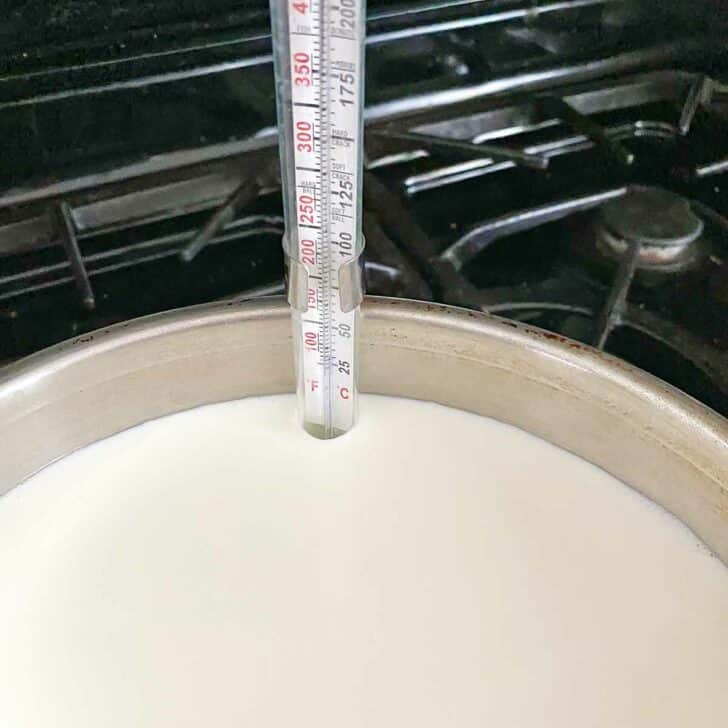
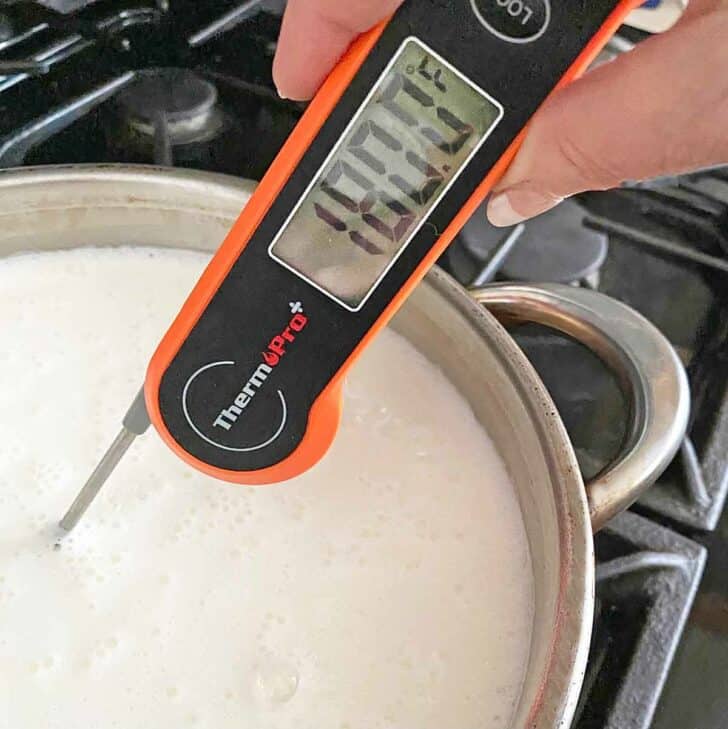
STEP FOUR: As soon as the temperature reaches 180 degrees, F, immediately remove the pot from the stove. Pour the milk through a wire mesh strainer into a 3 quart baking dish and leave it uncovered.
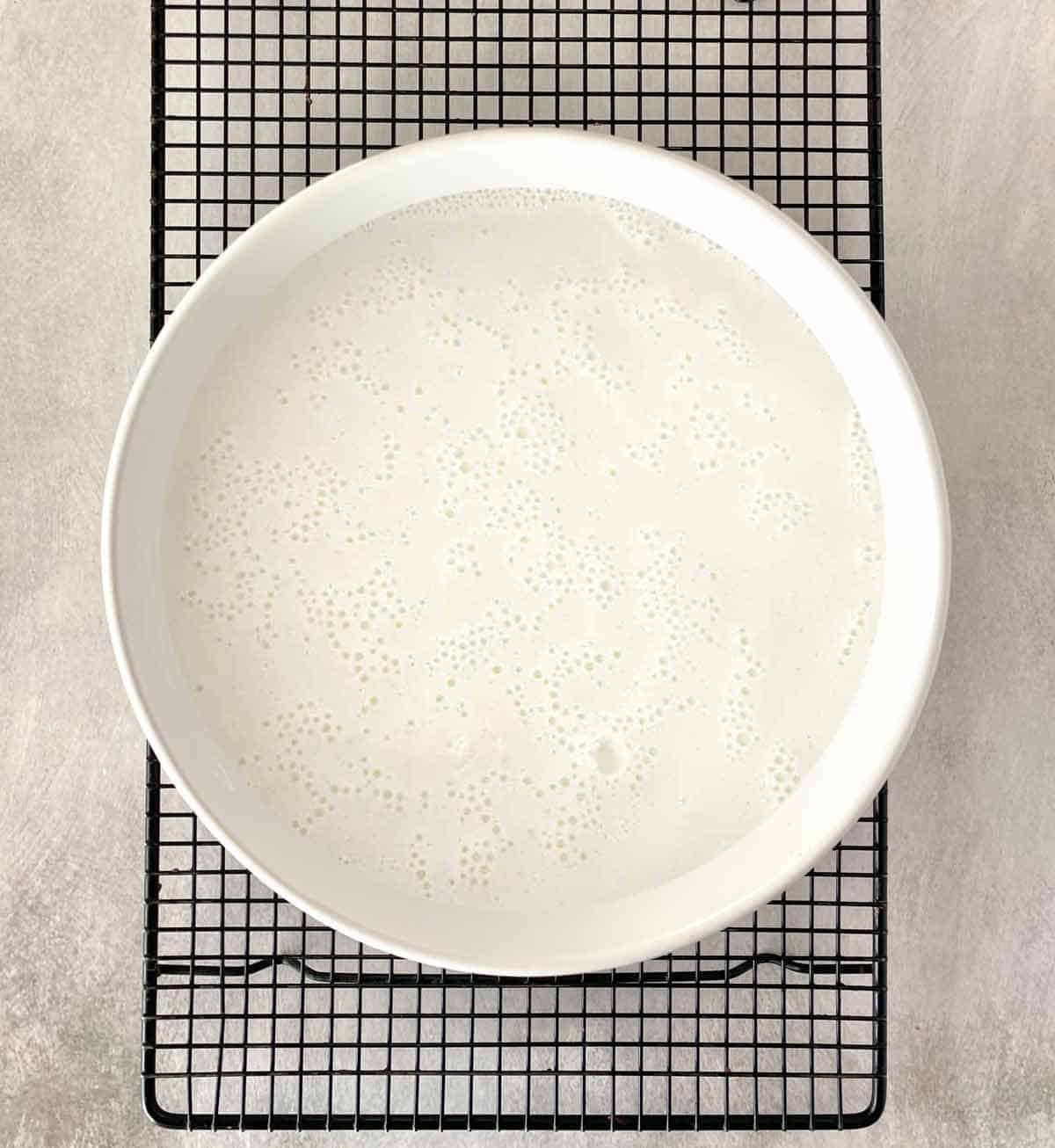
Put the dish on a cooling rack at room temperature, and let the milk cool to between 105 and 110 degrees F. Stir it a few times during the cooling process to prevent a “skin” from forming on top of the milk.
In our kitchen, this took about 50 minutes. (Note: remember to leave the dish completely uncovered at this stage, so the good bacteria from the air can start working their magic!)
STEP FIVE: While you’re waiting for the milk to cool, turn on your oven to the “warm” or “proof” setting. If your oven doesn’t have that setting, turn it to 150 degrees F.
STEP SIX: Combine the 2 tablespoons of milk you saved with 2 1/2 tablespoons prepared yogurt in a small bowl and reserve.
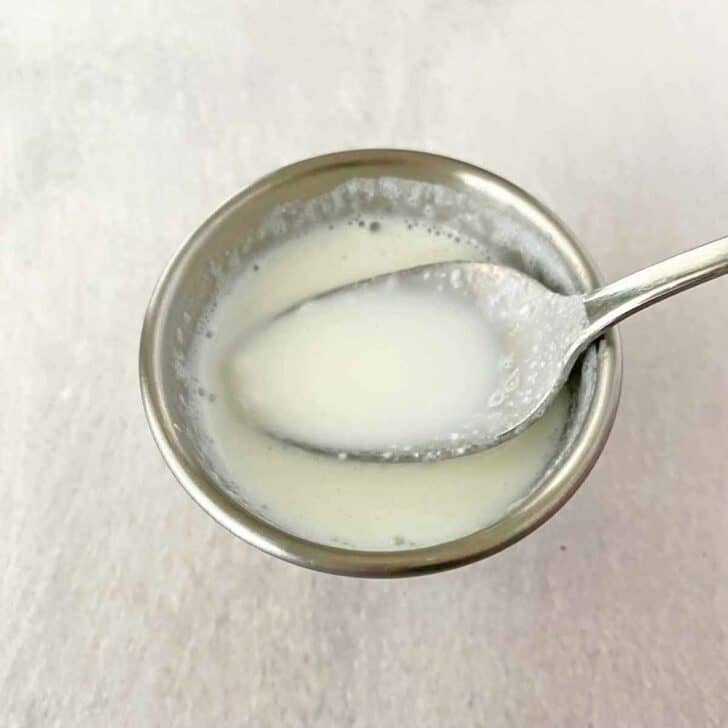
PRO TIP: Resist the temptation to add more than 3 tablespoons yogurt. According to the Joy of Cooking, “you may wonder why so little starter is used and think that a little more will give a better result. It won’t. The bacillus, if crowded, gives a sour, watery product.”
STEP SEVEN: Once the milk has cooled to between 105 and 110 degrees, add the yogurt-milk mixture and stir well to combine. (Don’t forget this important step.) Put the lid on the casserole dish and cover it with a dishtowel to help insulate it from temperature fluctuations.
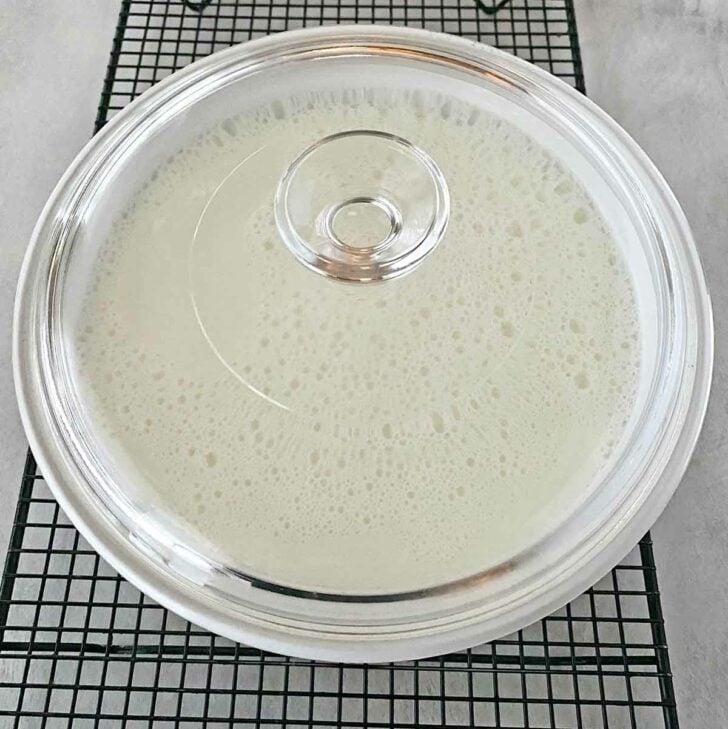
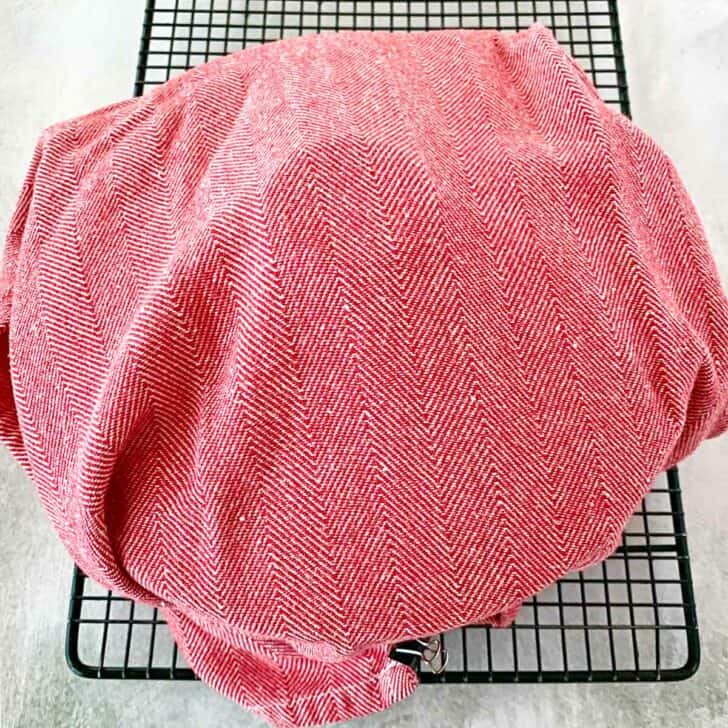
STEP EIGHT: Turn your oven off, but now turn the oven light on. Just the light from the oven should keep the dish warm enough to enable the yogurt-making process.
Put the towel-covered dish in the oven, making sure that the towel isn’t touching the oven lightbulb, and leave the oven light on.
Note: If your oven light doesn’t emit any heat, you can alternately put the towel-covered dish on a heating pad set on “low,” or put it in a cooler with a snug-fitting lid and several sealed jars of hot water to maintain the heat.
Leave the yogurt undisturbed for 7 or 8 hours, or overnight.
STEP NINE: In the morning, carefully take the dish out, unwrap it and remove the lid, and check to see whether the milk has turned to yogurt. After ten hours, this is how our yogurt looked:
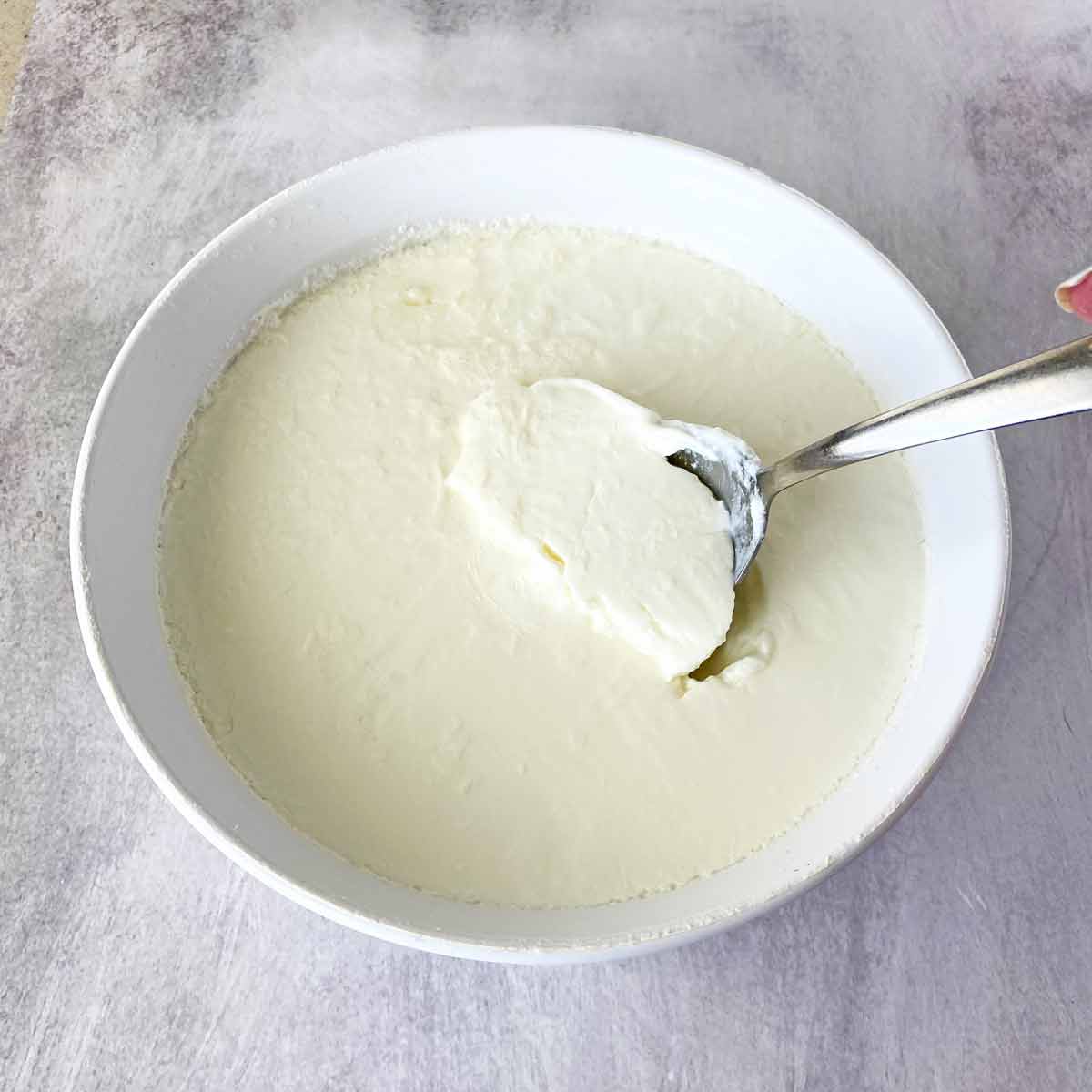
If your batch isn’t quite thickened, return it to the oven and check on it again in an hour. Once the yogurt is sufficiently thickened, you can stop at this stage if you want regular yogurt. Just stir the mixture and refrigerate it; you may need to pour off a little of the watery liquid. Don’t forget to turn off the light in your oven!
STEP TEN: For creamy Greek yogurt, refrigerate the yogurt in the covered dish for at least three hours to allow it to completely cool and thicken.
Meanwhile, line a large strainer with four layers of damp cheesecloth and find a bowl that the strainer will fit inside:
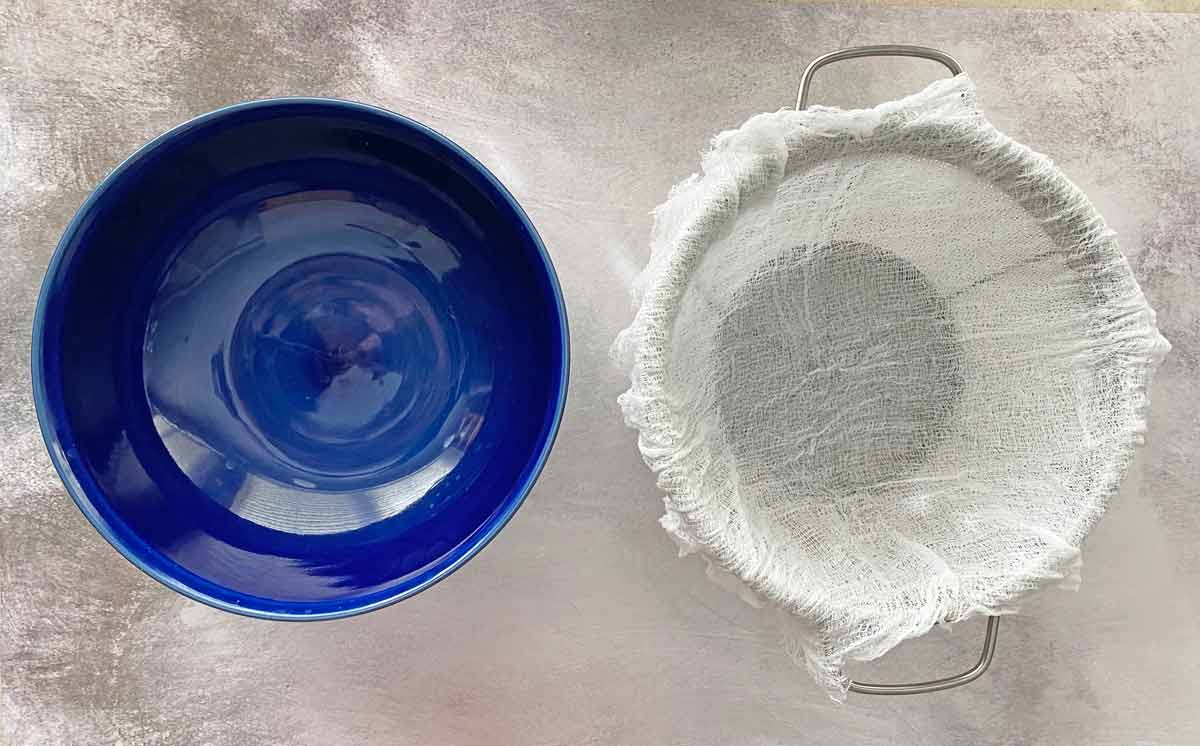
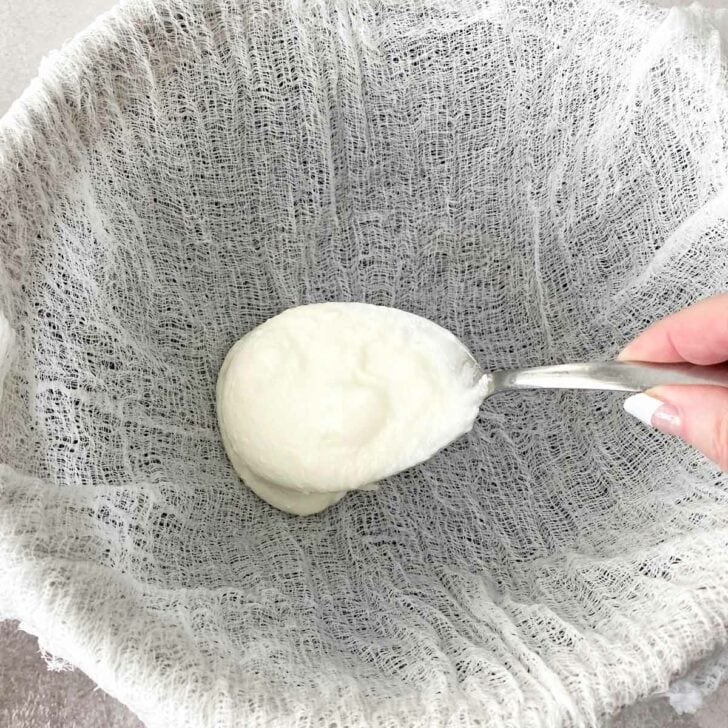
STEP ELEVEN: Put the strainer inside the large bowl, and spoon in all the yogurt to start the straining process.
Refrigerate for one hour. Pour out the liquid that has accumulated in the bottom of the bowl. This is the whey—that’s right, the very same delicacy Little Miss Muffet ate while she was sitting on her tuffet.
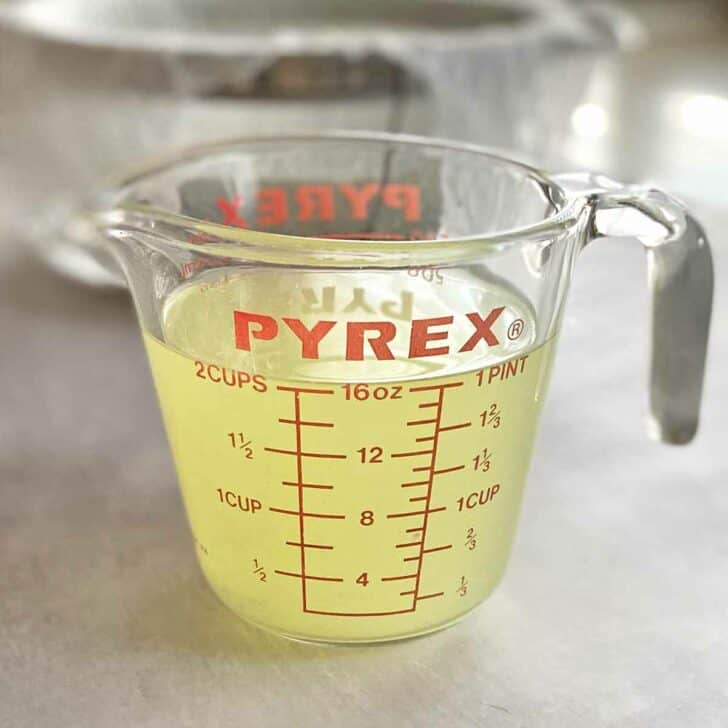
You can save the whey and use it for cooking or baking (like this yummy Whey Sourdough Bread).
Return the bowl to the refrigerator for one more hour, and strain the liquid again. Our batch drained off about two cups of whey, but you may have more or less and that’s fine.
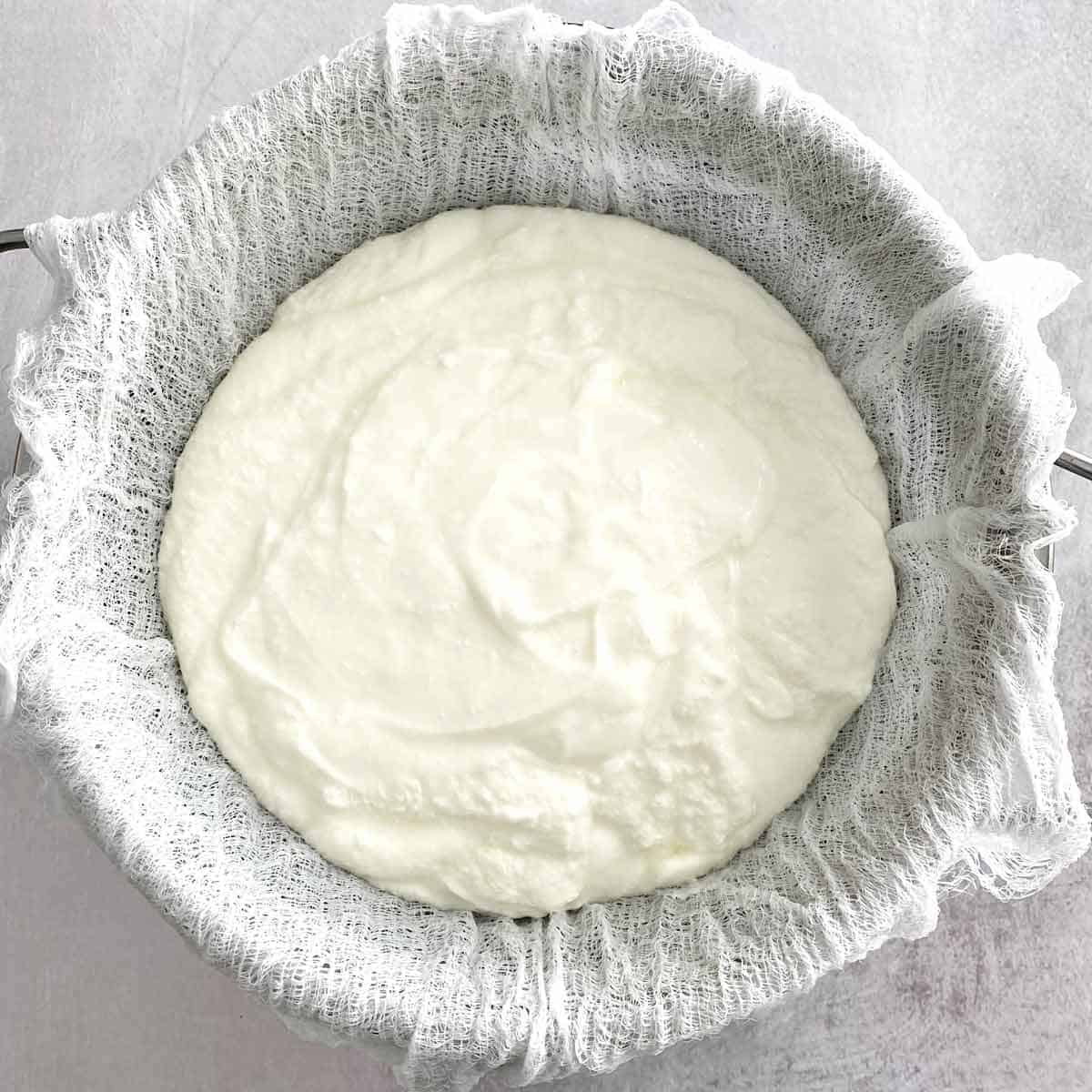
The yogurt should now look thick and creamy:
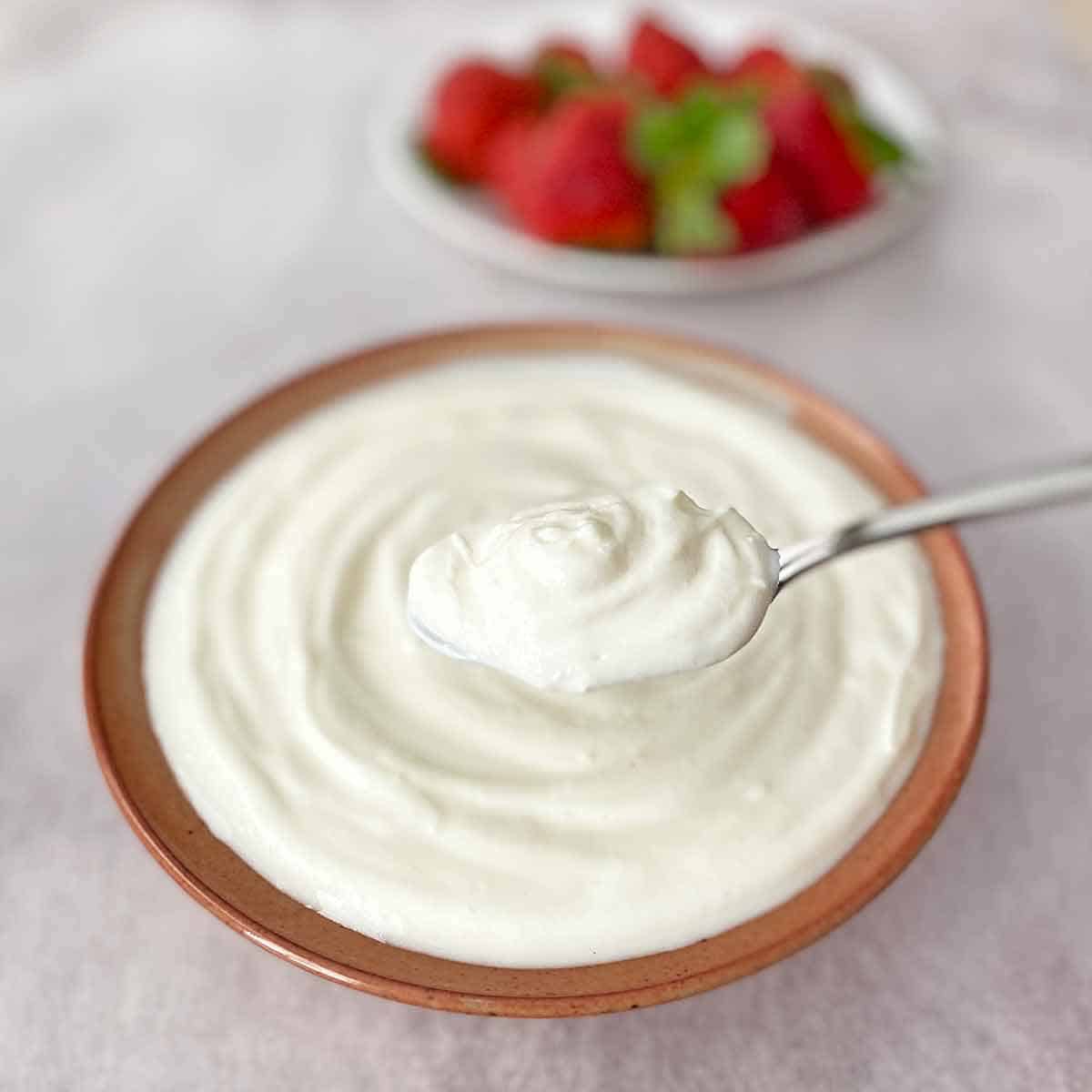
STEP TWELVE: It’s ready to serve! Transfer it to a bowl and stir it for a minute or two to smooth the thick yogurt before serving. Or spoon it into a container and refrigerate it, tightly covered, for up to a week. Makes about 6 cups, or 8 6-ounce servings.
Serving Suggestions
You can enjoy the Greek yoghurt as is, or top it with:
Remember to save a couple of tablespoons of your homemade yogurt so you can use it as starter for the next batch!
Other Ways to Use Greek Yogurt
- Use it in place of sour cream in your favorite dip recipe.
- Make Tzatziki Sauce, the sauce/dip that’s popular with gyros and in Mediterranean cuisine.
- Spoon it over a baked potato.
- Blend it into a breakfast smoothie.
- Make yogurt popsicles!
Troubleshooting: If Your Homemade Greek Yogurt Doesn’t Thicken
After many successful batches of homemade yogurt, I recently had a big FAIL. The only thing I’d done differently was to use our smaller, upper oven to incubate the yogurt instead of the lower oven I usually use.
When I pulled the yogurt out the next morning it hadn’t thickened at all; it was simply a big bowl of warm milk. I was so disappointed! At first I suspected the milk, because I’d used the big-name brand of organic milk that is known to be ultra-pasteurized. But when I measured the temperature of the milk, it was 130 degrees – too hot.
I decided to experiment with the failed batch, and let the milk cool back to 110 degrees. Then I added 2 more tablespoons of yogurt mixed with 1 tablespoon of milk. (My thinking was that the too-high temperature had killed the live cultures from the previously-added yogurt.)
I wrapped the bowl in a towel, put it in the lower oven with the oven light on, and let it rest for 8 hours.
When I opened the lid, I was amazed to see that the batch was thick and creamy. In fact, it was one of the thickest batches I’ve ever made. The consistency was slightly sticky, but after I strained the yogurt it was fine.
So if you ever have a batch that fails, you may want to try again and try to find the right spot where you can keep the yogurt at that ideal temperature of about 110 degrees F.
Printable Recipe Card
If you enjoy this recipe, click on the stars ⭐️⭐️⭐️⭐️⭐️ below to leave a rating! It helps us so much, and we love reading your comments, too!
Homemade Greek Yogurt
Equipment
- Candy thermometer
- Large mesh strainer
- Large mixing bowl
- Cheesecloth
- 3-quart casserole dish
- cooling rack
- Large dishtowel
Ingredients
- 1/2 gallon whole organic milk
- 2 1/2 tablespoons plain yogurt with active cultures
Instructions
- Pour 2 tablespoons of the milk in a small bowl and reserve.
- Pour the rest of the milk into a double boiler or heavy-bottomed pan and turn the heat to medium. If using a double boiler, cover the milk. If the pot is directly on the burner, stir it and watch it very, very carefully so you don’t burn the bottom.
- Heat the milk to 180 degrees F. It helps to clip a candy thermometer to the side of the pan so you can carefully watch the temperature as it rises. Or you can check frequently with an instant read thermometer.
- As soon as the temperature reaches 180 degrees, F, immediately remove the pot from the stove. Pour the milk through a wire mesh strainer into a 3 quart baking dish and leave it uncovered. Let the milk cool to between 105 and 110 degrees F, stirring a few times during the cooling process to prevent a “skin” from forming on top of the milk.
- Turn on your oven to the “warm” or “proof” setting. If your oven doesn’t have that setting, turn it to 150 degrees F.
- Combine the 2 tablespoons of milk you saved with 2 1/2 tablespoons prepared yogurt in a small bowl and reserve.
- Once the milk has cooled to between 105 and 110 degrees, add the yogurt-milk mixture and stir well to combine. Put the lid on the casserole dish and cover it with a dishtowel to help insulate it from temperature fluctuations.
- Turn your oven off, but now turn the oven light on. Just the light from the oven should keep the dish warm enough to enable the yogurt-making process. Put the towel-covered dish in the oven, making sure that the towel isn’t near the oven lightbulb, and leave the oven light on. Leave the yogurt undisturbed for 7 or 8 hours, or overnight.
- After 8 hours or the next morning, carefully take the dish out, unwrap it and remove the lid, and check to see whether the milk has turned to yogurt. If your batch isn’t quite thickened, return it to the oven and check on it again in an hour.
- Once the yogurt is sufficiently thickened, place the dish in the refrigerator for 3 hours. Cut 4 pieces of cheesecloth to fit inside a large wire mesh strainer. Run the cheesecloth under water and squeeze out as much water as you can.
- Line the strainer with the cheesecloth and place it inside a large mixing bowl. Spoon all of the yogurt into the strainer. Refrigerate for 1 hour and pour the liquid that has accumulated into a large measuring cup. Return the bowl to the refrigerator for one more hour, and strain the liquid again.
- Your delicious Greek yogurt is ready to enjoy! Stir it for a minute or two to smooth the mixture before serving. Or spoon it into a container and refrigerate it, tightly covered, for up to a week. Makes about 6 cups, or 8 6-ounce servings.
Notes
Nutrition
Save for Later
If you use Pinterest to save and share ideas, here’s a handy pin:

Eliza Cross is the creator of Happy Simple Living, where she shares ideas to help busy people simplify cooking, gardening, holidays, home, and money. She is also the award-winning author of 17 cookbooks, including Small Bites and 101 Things To Do With Bacon.




I’ve been making my own yoghurt for many years now, instead of throwing out the whey I use it to make a Norwegian cheese called Gjetost (Brown Cheese) which is delicious… and as I know live in Norway, appropriate! :o)
Found this after reading your comments.
Uses for whey. Go to the bottom of the recipe.
http://www.stacymakescents.com/homemade-greek-yogurt
Thanks so much for stopping by to share this information, Brian. Who wants to waste the whey when it can be put to good use? Very helpful.
pleas send me process of the yoghurt production
I,m a small produtoer in sri lanka
Thank you SO much!! I’ve been making my own yogurt for over a year, but did NOT know why it was so watery!! Came upon your site to make Greek yogurt, so I am trying to make a batch now!! Both my children love yogurt and my son is coming home from Afghanistan next month, so I’ve been trying to improve on my recipe so he can have plenty when he comes home. I’m so excited! : D
I just finished separating the whey from my yogurt…this is the best I’ve made in 2 years! My kids will be so excited.
Question, has anyone had any luck making yogurt using soy milk or almond milk?
I’m not sure about soy milk or almond milk, but thought you might be interested in this recipe for making homemade coconut milk yogurt:
http://www.smallfootprintfamily.com/2009/04/25/homemade-coconut-milk-yogurt/
Instead of incubating in the oven, I used a small space heater on the countertop. The batch was covered and wrapped in a towel. I could move the heater accordingly and confirmed w/ a thermometer 100* sustained heat for 12 hours. Stained 3x (just like fage) for some rediculously thick fat free yogurt!
That’s a great idea, Wilson. Thanks for sharing it!
Thank you for this recipe i have been using it for a couple of months now and love that i control what the sugar content is.. store bought is so high in sugar and being diabetic i can’t eat much of it! after eating this my Blood Sugar doesn’t go up much at all!!!
Tammy, what happy news. :-) I’m glad you can make your own yogurt and stay healthy. Thanks so much for your comment.
Such a great and simple recipe- I used the Wallaby organic yogurt you have in the picture, very delicious!
So glad the recipe worked for you, Jennifer. Thanks for letting us know!
Thanks for the recipe. On an associated note, while I do like sweets, I don’t always like to start my day with sweetened yogurt. Instead, I like to have a yogurt and tomato salad for breakfast. This gives me a good dose of protein without all the carbs that yogurt with granola and sweetener delivers. To make my “salad” I use about a cup of coarsely chopped high quality tomatoes, about a cup of Greek yogurt, fresh sea salt and pepper, and a drizzle of olive oil and balsamic vinegar. Yummy and filling without all the carbs.
That sounds fabulous, Mike. Thanks for sharing your low-carb lunch special with us.
I have been making the yogurt for about 2 months now and love it. I have also got my son and his wife involved. But I have been having a little problem,my yogurt sometimes has a grainy texture I can’t figure what it is that I do wrong the taste is good, but the texture feels like small cheese curds. Any ideas of how to correct this? Thanks for a great site. Linda
I haven’t tried it but it sounds like it will work just fine. I love the way it comes out. Both are necessary to ensure a safe product.
So if I don’t have an oven (just a smaller toaster oven) could I just skip the oven light step? Would leaving it on the counter be enough heat? Or maybe putting a desk lamp on it while keeping it covered? Thanks for the awesome post!
This yogurt looked very nice. I love eating yogurt but I only tasted the commercially-bought yogurt. I haven’t tried making a homemade yogurt so I am excited to try this recipe. Thanks for sharing it.
we have been using powdered whole milk to make yogurt. hard to find this product, but amazon carries it. made by nestle, called Nido; about $13 and makes about 4 gallons of milk, more if you like thicker tastier milk, ditto yogurt
Great tip – thank you, Joanne!
I’ve been making yogurt in my crockpot for a few months. I basically followed these instructions, but did it in the crock (although I am a microbiologist and did not keep the pot open to air or change pots because I was paranoid about contamination). Anyway, the first time I used Chobani as a starter. The yogurt came out perfect. So thick with no need for straining. Next I tried Wallaby and then Stoneyfield. The results were good, but nowhere near as good as with the Chobani. I still have to go back and repeat the results with Chobani, but I’m wondering if their cultures make the difference. Anyone else experiment with the starter?
I do this exact recipe of yogurt only I do it in a crockpot so easy.
I am going to have to try the crock-pot method. Thanks, Penny.
I love Greek Yogurt! But it’s so expensive. I found out that I could make cheap greek yogurt easily by using a yogurt strainer. You just pour in cheap store-brand yogurt, refridgerate and voila! 4 hours later you have delicious greek yogurt for about 1/4 of the cost. You can even use organic yogurt for a good price too.
*Note: regular yogurt only makes about half as much greek yogurt. So a 32 oz container makes about 16oz of greek yogurt. But still that’s about $1 per 16oz! Verus $3.5 or more for greek yogurt. Put it in little containers with a littler sugar and fruit and save a ton over individual greek yogurt cups!
Thanks for sharing this simple idea! :-)
Well, five gallons of milk later and I still can’t make yogurt. I’ve tried variations of this recipe using different types of milk and yogurt, added powdered milk, used different kinds of pots to “incubate” the yogurt – nothing works. It’s not that the end result is grainy or sour, the yogurt just won’t form, I basically end up with warm milk. Disappointed!
I feel personally responsible for your yogurt not forming, and I am going to e-mail you so we can correspond and figure out what’s wrong. Your “Yogurt Luddite” name made me laugh. :-)
Ah, thanks. I think the problem is that the yogurt wasn’t staying warm enough during the incubation period (oven light wasn’t sufficient). I had a gift card so I ended up buying a yogurt maker and have a batch in there right now. Hope it works!
Success! Turns out, the issue was the temperature in which I incubated the yogurt. I followed the rest of your instructions and the yogurt turned out great!
Hurray! I’m happy now. :-)
I’ve seen lots of great ideas in the comments. I use the cooler technique with glass quart jars and lids and some with boiling water in them to maintain the temperature because I make so much at once. I also sterilize things — including spoons, pot, containers – to not introduce unwanted bacteria. The whey can be used in so many other ways — (with acidity)ricotta cheese, cottage cheese…. Need to Google and go to quite a few sites to see lots of variations. Basic thick yogurt is made with very high fat milk. The milk used in Greek natural — as she mentioned with sheep, Jersey cows — their milk is much higher in fat than say Holsteins. Milk from the animals, heated, and then made into cheeses, yogurt, etc will be rich and thick. Our regular “whole” milk has lots of fat removed so they can sell cream. Putting some cream back will help. Whey has sugar in it, so taking it out also does take out some sugar.There are lots of cookbooks out there for ways to use yogurt, so do remember that you can have lots of options. Temperature is critical — so it your attempts aren’t working, do figure out a way to keep that 100-110F. Another way to get better drainage faster — stir the yogurt before straining (I use basic, cheap coffee filters – buy them bulk). Unfortunately, look at different yogurts you like — many use thickening agents. Very many. I also freeze yogurt in thick baggies then into a big thick bag– into the deepest part of the freezer (to avoid freezer burn). I have good starter for each time rather than using from made batches and losing the quality over time. I also have starter for whenever I want — like after a vacation or maybe an illness. It sure feels liberating doesn’t it! Thanks for posting and helping others!! Saving money feels great….
My favorite Greek yogurt is Oitkos Organic. It has 5 live cultures, no thickeners, and is made from pasturized non-fat organic milk. Stonyfield has just bought out the company and the plain 32 oz. has become difficult to find. I can only find it at Whole Foods and it is expensive! This blog has given me the inspiration to make Greek yogurt from scratch using a starter from my favorite yogurt. WOW! I’m excited!
Do you know if this greek yogurt has as much protein as the store bought stuff?
Viviana,
The protein percentage would be determined by the milk you use and how much whey you strain out, but in general there shouldn’t be a big difference. If you want to boost the protein level of your homemade yogurt, add a couple of tablespoons of dried milk powder to the milk when you first heat it. Thanks and good luck!
xo
Eliza
Do you have any suggestions if your oven doesn’t have a light?
Yes, you can use the “proof” setting if your oven has that setting. Or you can put the towel-covered dish on a heating pad set on “low.” Some people even pack the towel-covered dish in a cooler and add some glass jars of very hot water to keep it warm. Good luck!
So very excited! Cooling in the fridge right now! $4.40 for a gallon of yogurt! AMAZING!!!!!
So glad it worked for you!
xo
I love your blog and have been thinking about making yoghurt for a while. Last night I had about a litre of milk that was turning sour so I heated up the 2% milk till it nearly boiled and then allowed it to cool down to about blood temp (my thermometer is broken).I poured the milk into a glass bowl and I stirred in one tablespoon of bought plain yogurt and then covered the bowl with a clean towel. I placed the bowl into my “hot box” which is just two big pillows and left it for the night. This morning I had lovely yoghurt but it was a little thin so I poured it into a cheesecloth and placed the whole lot in my sieve over the milk pot from last night. I left it in the fridge while I went for a cycle ride. When I got home we had lovely thick yoghurt on our cereal. It was so easy thank you!!
Hurray! I’m so glad the recipe worked for you, Hilary. Thanks for stopping by.
Can you use whipping cream rather than milk?
Whipping cream has 0 carbs and the yogurt I use has 9 grams of carbs per cup. This would be very low carb for those of us on carbohydrate diets.
TQ, I don’t have any data to support this but it seems like you could try replacing some of the milk with some cream – my hunch is maybe 15 to 20 percent. If you experiment, will you let us know how it turns out?
I make yogurt with heavy whipping cream all the time and it works fine. For those counting carbohydrates it is great!
I do not use the powdered milk or the gelatin. Simply the heavy whipping cream and 2.5 tablespoons of Fage yogurt. I incubate mine in an ice chest with a heating pad. I cover the ice chest with a heavy quilt and in eight hours, I have the most wonderful yogurt you can imagine.
Man, I bet it tastes great! xo